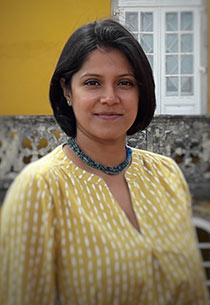
Dr Anika N. Haque
Associate Professor in Human Geography and Environment
Profile
Biography
Dr Anika Haque is Associate Professor of Human Geography and Environment at the University of York. She chairs the Equity and Diversity Committee for the Department of Environment and Geography and leads the Stewarding transitions and transformations to sustainability research group. She also co-leads the Urbanisation and Health network for the Interdisciplinary Global Development Centre (IGDC).
Dr Haque’s research is interdisciplinary and situated at the intersection of society, environment and development. She is broadly interested in the (inter)relationships between inequality and climate change resilience driven by the everyday and embedded structural inequalities at city level.
Her research is grounded in Systems thinking - not only for unpacking the complex interdisciplinary problems of the contemporary cities, but also to identify solutions and pathways to achieving the overlapping sustainable development goals in the global South. Much of her research has empirically focused on cities across the global South and have been funded by a wide range of sources such as AXA, UKRI, British Academy, Leverhulme Trust, INRIC, ESRC, Schlumberger Foundation, FCDO. Dr Haque was the lead author for the UCCCRN third global assessment report on cities and climate change, and, also the Internal Reviewer for the IPCC Sixth Assessment Report for Climate Change, and the expert reviewer for the IPCC special report on Climate Change and cities. She is also contributing author to the IPCC seventh assessment report. Dr Haque’s work is widely published in world-leading journals in the field of geography, development, environment as well as in interdisciplinary journals. Her work on climate change and urban resilience has informed the policymaking process/es in South Asia and the UK and has received wide coverage in news media such as the Daily Star, Yorkshire Post, BBC etc.
Dr Haque has an interdisciplinary (academic) background: PhD in Geography (University of Cambridge), Masters in Urban Management and Development and Bachelors in Architecture. She also holds a postgraduate certification in Higher Education and is a fellow of the Higher Education Academy. She was a research fellow at the University of Cambridge (2018-2022) and a visiting academic at the University of Oxford. Dr Haque is a Fellow of the Royal Geographical Society (with the Institute of British Geographers). She sits on the editorial board for the journal Frontiers in Climate.
Awards
Dr Haque has received numerous prestigious awards for her research. She has been awarded the 2023 AXA IM Research Award for her contribution in the field of climate change, which marks her as the first global South scholar to receive this prestigious accolade.
Dr Haque has also been selected as one of the 20 emerging leaders in the UK in the field of Environmental Social Science by ACCESS Network in the year of 2022. She was also awarded the Young Scientist Award in 2012 in the field of Sustainable Development by The International Network of Resource Information Centres.

Departmental roles
Chair of Equity/Equality, Diversity and Inclusion Committee (EDIC).
Research
Overview
Dr Haque’s research has three interrelated strands (as mentioned below) addressing the intersection of various sustainable development goals, namely climate action (goal 13), gender and economic inequality (goal 5 and 10), sustainable cities and communities (Goal 11) and energy access (goal 7):
a. Climate change resilience - primarily focusing on understanding the political economy (in which livelihoods operate) and the political ecology (including urban governance as well as sociocultural processes) and its overlap with the development contexts shaping the urban (adaptation and) resilience processes in the global South (with a particular interest in the marginalised populations).
b. Gender inequality/vulnerability - exploring the ‘gender(ed)’ vulnerability to urban risks and ways in which gendered considerations can be integrated into public policies. Much of her recent research focuses on understanding the gender(ed) vulnerability to climate risks.
c. Energy transitions - exploring ways in which ‘just’ energy transition pathways can be achieved addressing the dual challenge of limiting the danger of climate change and increasing socioeconomic inequality particularly across the Global South.
These are being explored through a number of (inter)connected research projects and outputs:
Projects
- 2024-2029: Urban climate change resilience in the global South, Principal Investigator, funded by AXA Investment Managers (multiple case studies across the global South).
- 2025-2027: Co-Designing Clean Energy for Rural Africa with Service Innovations and Digital Twins (CREDiT), Co-investigator, funded by UKRI (case study: Kenya, Malawi, Zambia).
- 2026-2027: Behavioural Activation-Climate Adaptation & Resilience Enhancement (BA-CARE), Co-investigator, funded by ESRC IAA (case study: Pakistan and Bangladesh).
- 2026-2027: Early Warning to early action for Small-Scale Fishers, Co-investigator, funded by INRIC (case study: India).
- 2023-2025: Women in cities and climate change: towards an inclusive pathway for climate change adaptation in the global South, Principal Investigator, funded by British Academy and Leverhulme Trust (case study: Bangladesh).
- 2023-25: Gendered risks and responses to climate change: developing a systems understanding, Principal Investigator, in collaboration with UC Berkeley, funded by International Network of Resource Information Centres (case study: Bangladesh).
Past (selected) projects:
- 2023-24: Understanding the ‘overlapping’ risks of climate change and urbanization: building a response to gendered well-being, Principal Investigator, funded by York Environment and sustainability Institute (case study: Bangladesh).
- 2019-20: Energy innovation for low-cost housing in India and South Africa: strategies for inter-disciplinary and cross-institutional dialogue, Research Fellow, funded by British Academy (GCRF Cities & Infrastructure) (case study: India and South Africa).
- 2019-20: Learning between stakeholders: energy innovation for low-income housing in the Western Cape, South Africa, Research Fellow, funded by British Academy Knowledge Frontier’s grant (case study: South Africa).
- 2018-19: Gender vulnerability in India’s slum rehabilitation housings, Research Fellow, funded by British Academy Knowledge Frontier’s grant (case study: India).
- 2013-17: Adaptation to flooding in the low-income urban settlements of the Least Developed Countries, Principal Investigator, funded by Schlumberger Foundation (case study: Bangladesh).
- 2012-14: Pro poor adaptation to Climate Change in Urban areas of Bangladesh, Co-Investigator and national lead, funded by FCDO (former DFID) (case study: Bangladesh).
- 2009-10: Climate change adaptation assessment in Least developed countries, funded by Netherlands Funding Program (case study: Bangladesh).
Supervision
Dr Haque would be pleased to hear from highly motivated students interested in pursuing masters and doctoral studies that resonate with her research interests in Urban Geography (Urban resilience, Poverty; Inequality; Development); Climate Change Vulnerability and Adaptation; Disaster Risk Reduction; Gender vulnerability as well as those with empirical interests in Urban South Asia.
Publications
Selected publications
- Lorenzoni, I.; Walshe, R., Haque, A. N. et al. (2026). Putting people at the centre of UK climate adaptation and resilience’. Government Office for Science. GO-Science, UK.
- Haque, A. N. (2026). The gendered trap: climate policy, inequality, and adaptation lock-ins in Global South Cities. Environmental Research: Climate. 5 (035003).
- Ganesh, S., White, P. C. L & Haque, A. N. (2026). Challenges and opportunities of technology use for coordinators of animal-related citizen science projects: a scoping review. Frontiers in Environmental Science. 14 (1816386)
- Reckien, D., Juhula, S., Haque, A. N. et al. (2025). Justice for Resilient development in Climate-stressed Cities, in Solecki, W. et al. (Eds.). Elements in Climate Change and Cities: Third Assessment Report of the Urban Climate Change Research Network, Cambridge University Press.
- Lemanski, C., Haque, A. N. & de Groot, J. (2025). The false optimism of electrification: why universal electricity access has not delivered urban energy transformation in South Africa. Energy Policy. 198 (114506).
- Haque, A. N., Lemanski, C. & de Groot, J. (2021). Is (in)access to infrastructure driven by physical delivery or weak governance? Power and knowledge asymmetries in infrastructure governance in Cape Town, South Africa. 126.
- Haque, A. N. (2021). Climate risk responses and the urban poor in the global South: a case of Dhaka’s low-income settlements. International Journal of Disaster Risk Reduction. 64 (102534).
- Haque, A.N., Lemanski, C. & de Groot, J. (2021). Why do low-income urban dwellers reject energy technologies? Exploring the socio-cultural acceptance of solar adoption in Mumbai and Cape Town. Energy Research & Social Science. 74 (101954).
- Haque, A. N. (2020). A 'Whole Systems' View of Vulnerability to Climatic Risks: The Case of the Urban Poor in Dhaka, Bangladesh. Progress in Development Studies.
- Haque, A. N.,Bithell, M. & Richards, K. S. (2020). Adaptation to flooding in low-income urban settlements of the least developed countries: a systems approach. The Geographical Journal.
- Bardhan, R., Sunikka-Blank, M and Haque, A. N. (2019). Sentiment analysis as tool for gender mainstreaming in slum rehabilitation housing management in Mumbai, India, Habitat International.
- Sunikka-Blank, M., Bardhan, R. and Haque, A. N. (2018). Gender, domestic energy and design of inclusive low-income habitats: A case of slum rehabilitation housing in India, Energy Research & Social Science,49, pp. 53-67.
- Haque, A. N. (2016). Application of Multi-Criteria Analysis on Climate Adaptation Assessment in the Context of Least Developed Countries, Journal of Multi-Criteria Decision Analysis, Wiley Online Library.
- Haque A. N.,Dodman, D. and Hossain, M. M. (2014). Individual, communal and institutional responses to climate change by low-income households in Khulna, Bangladesh, Environment and Urbanization, Volume 26 Issue 1, pp 1-18.
- Haque A. N., Grafakos, S., Huijsman, M. (2012). Participatory integrated assessment of flood protection measures for climate adaptation in Dhaka, Environment and Urbanization, Volume 24 Issue 1, pp 197-213.
- Haque, A. N. and Grafakos, S. (2010). Assessment of adaptation measures against flooding in the city of Dhaka, Bangladesh, IHS Working Papers, Number 25/2010, Institute for Housing and Urban Development Studies, Rotterdam, The Netherlands.
Selected policy brief:
- Haque, A.N. and Elsey, H. (2023). Addressing the ‘overlapping’ risks of climate change and urbanization and building a response to gendered well-being. YESI policy brief, University of York, U.K.
Selected blog:
- Haque, A. N. (2018). Housing or Poverty Trap for Women? A Case of Slum Rehabilitation Housing in Mumbai.
- Save flood vulnerable eastern fringe of Dhaka
Selected media:
- BBC Arts animated thinking (2020) ‘A room in Mumbai’
- Slums or Formal Housing? Looking through urban women's eyes.
- Understanding the Overlapping Risks of Climate Change and Urbanisation
Related news:
Newspaper interview: https://www.thedailystar.net/opinion/focus/news/climate-change-and-unplanned-development-are-creating-new-set-damaging-risks-3502466
Research coverage: Yorkshire post
Research related news: https://www.york.ac.uk/york-unlimited/news/2023/axa-research-fund-2023/
Research related news: https://www.york.ac.uk/yesi/news/2023/climate-change-urbanisation-wellbeing-research/
External activities
Overview
- Fellow, Royal Geographical Society (with the Institute of British Geographers).
- Visiting Research Fellow, BRAC Institute for Governance and development.
- Associate, International Centre for Climate Change and Development (ICCCAD), Bangladesh.
- Access Leadership College Fellow
- Life Member, The International Network of System and Sustainability.
- Fellow, Cambridge Philosophical Society.
- Member, Global Energy Nexus in Urban Settlements (Interdisciplinary research group), University of Cambridge.