
English and Related Literature

- Department of English and Related Literature
- Research
- Featured research projects
Featured research projects
Imagining Peace: The role of orature in conflict resolution and peace building among the Guji-Oromo of Southern Ethiopia
.jpg)
The main purpose of Ayele Kebede Roba's British Academy-funded project is to study how oral imaginative expressions among the Guji-Oromo of southern Ethiopia negatively portray opponent groups and incite conflicts and how they, on the other hand, promote peace, and challenge traditional concepts of male bravery that encourage men to be violent. The project follows an interdisciplinary decolonial approach to examine how the different elements of orature and their performance are shaped by and shape socio-cultural practices that situate orature within national and world literary production.
Ayele's fieldwork in Ethiopia during the summer of 2025 has shown that orature is still actively used by the Guji Oromo to promote and build peace while also used to incite conflicts. The use of orature in socio-cultural practices contributes to its development and proves its ever increasing relevance in the contemporary digital world.
100 Years of The Well of Loneliness
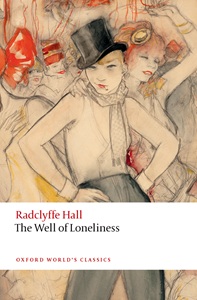
Dr Hannah Roche is Project Co-Lead on 100 Years of The Well of Loneliness, an international research project that has been awarded an Arts and Humanities Research Council (AHRC) Standard Research Grant of more than £1,000,000.
100 Years will trace the complex reception history of the most famous banned book in LGBTQ+ history, Radclyffe Hall’s The Well of Loneliness (1928). The project team, which includes academics, archivists, and creative practitioners, will aim to capture and analyse the many ways in which Hall’s controversial novel has informed, affirmed, or offended readers around the world.
As part of the project, Hannah is leading a research strand on The Well’s role in the formation of queer identities, families, and homes—both real and fictional—over the past century. She is writing an academic monograph on queer domesticities and ‘companion reading’, bringing Hall into productive conversation with a range of critically neglected writers including Norah James and Naomi Jacob. Hannah is also working in partnership with the Queer Britain museum, London, to deliver a series of public lectures and workshops. Further project partners include the Harry Ransom Center, the National Archives, the Bishopsgate Institute, and the award-winning filmmaker Campbell X.
Romanticism and the Cost of Living
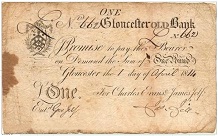
Dr Paul Stephens has been awarded a Leverhulme Early Career Fellowship (2024-27) for a project entitled ‘Romanticism and the Cost of Living’. The project investigates how literary writers in Romantic-period Britain (c.1780-1830) understood ‘the cost of living’ to encompass both financial challenges and philosophical questions. It examines the works and finances of several literary writers (including Charlotte Smith, William Godwin, Charles Lamb, and Mary Shelley) to reveal how their experiences of penury and debt shape their novels, poems, and essays. Combining archival research with scholarship in English studies and economic history, the project analyses each writers’ financial manuscripts (from ledger books to letters discussing money) to reveal their connections to the monetary ideas in their literary works, and it considers how these works converse with debates in contemporaneous newspapers and periodicals.
The project argues that writers of the Romantic period were the first to respond to the cost of living – an idea emerging in Britain at this time – in ways that anticipate modern debates on the psychological impact of financialisation. It thus investigates the connected financial and philosophical questions their work was forced to confront. Do intangible forms of money alter our understanding of value and worth? How does class and gender shape experiences of the cost of living? How is life itself impacted by the wider costs of living under changing economic conditions? Moving between literary texts and financial manuscripts, theory and life writing, the project aims to demonstrate how writers of the period articulate new moral and epistemic anxieties about Britain’s emerging financial economy.
For more information on the project, please contact paul.stephens@york.ac.uk.
Queens’ Ecologies of Knowledge in Seventeenth-Century Britain
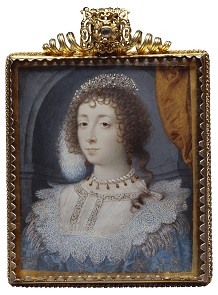
Susannah Lyon-Whaley has been awarded a Marie Sklodowska-Curie Actions Postdoctoral Fellowship (2024-2026, UKRI-funded). Supervised primarily by Lauren Working (Department of English and Related Literature, York) with a secondarysupervision by Cordula Van Wyhe (Department of History of Art, York), ‘OCEAN: Queens Consort and Ecologies of Knowledge in Seventeenth-Century Britain’ uses four focus objects and books owned by queens as touchstones for developing new perspectives on how elite Stuart women used and understood nature from across the sea within the political world of the British court. Susannah will examine queens’ cabinets, miniatures, chapel ornaments and porcelain, featuring materials such as ebony, flowers, pearls, silver, tusk, clay and botanics from the Americas, Japan, Europe, and the Ottoman Empire. She reads these alongside the queens’ books and masques, to reconstruct their own knowledge about materials and encounter. At the moment that Britain was seeking to establish itself as an imperial power, considering queens as collectors, consumers, and naturalists innovatively asks how royal women experienced, embodied, and politicised nature. Understanding the cultural and political context of these items is vital to their integration into consorts’ experiences and concepts of power. The project also asks, what do the objects and these literary structures of knowledge tell us not only about consorts, but about the lands, animals, and people from which they were sourced?
Ann Radcliffe: Then and Now
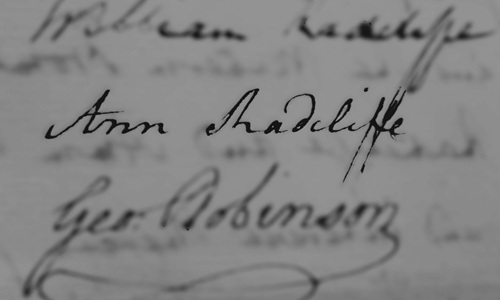
Dr Deborah Russell is Project Co-Lead on the AHRC-funded project, Ann Radcliffe: Then and Now.
Ann Radcliffe (1764–1823), known by her contemporaries as ‘the great enchantress’, was the most popular, widely read, and well-remunerated fiction writer of the 1790s. Publishing six novels, as well as poetry and travel writing, Radcliffe was at the head of her own literary school. A startlingly original and accomplished writer, she was instrumental in consolidating and popularising the Gothic as a literary mode.
Ann Radcliffe, Then and Now seeks to amplify the importance and brilliance of Radcliffe’s work for contemporary readers, generating fresh enthusiasm and regard for her work and reassessing her place in literary culture and aesthetics from the late-eighteenth century to the present. Alongside a series of public engagement initiatives and events, a major outcome of the project will be the staggered publication of The Cambridge Edition of the Works of Ann Radcliffe. Under the general editorship of Professor Michael (University of Pennsylvania) and Professor Angela Wright (University of Sheffield), The Cambridge Edition will be the first complete, scholarly publication of Radcliffe’s novels, travel writing, and poetry. Each volume will provide a standardised version of Radcliffe’s original text, thorough and thoughtful commentary on her practice, and essential contextual material. Deborah is the editor of Radcliffe’s first novel, The Castles of Athlin and Dunbayne (1789).
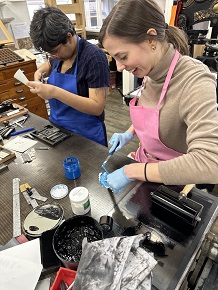
Thin Ice Press: York Centre for Print
Scientific Poetry and Poetics, from the Renaissance to the Enlightenment (1580-1750)
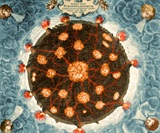
Kevin Killeen co-runs a project on early modern Scientific Poetry, awarded by the Arts and Humanities Research Council (AHRC), together with its German Equivalent, the Deutsche Forschungsgemeinschaft (DFG) worth in total c. €1 million. The project is a collaboration between researchers at York, Anglia Ruskin, Bayreuth and Marburg.
This project explores a mass of largely-unknown scientific poetry – and a corresponding poetics of science – that reveals a vibrant facet of Renaissance, Restoration, and Enlightenment culture: the production not only of ideas, but of new, technical vocabularies and fast-paced neologizing, all forged in the particular demands of poetic form. Poetry, the era believed, did not function as mere ornament, but to reveal deep structures in the created world. This potential was theorized by the period’s emerging literary criticism, a practice that developed in demonstrable parallel with modern ‘science’. It explores how this writing came to be valued precisely because of its discursive volatility and its kaleidoscopic capacity.
The research will unearth and analyze a body of work by men and women, much of it still in manuscript, that deploys its theo-scientific ideas to dazzling effect, as well as a mass of Neo-Latin verse on topics ranging from blood transfusion to flight theory. It will also show the diffusion of this phenomenal body of scientific literature and its agile poetics, whose influence can be seen in a set of networks operating across Northern Europe, in Latin and German as well as English, thereby tracing how a long history of didactic scientific verse morphs and mutates with dramatic effects in the late 17th and early 18th century.
Dante and Medieval Latin Poetics, between Theory and Practice
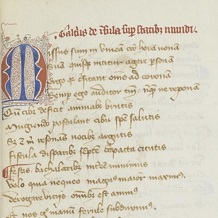
Ryan Pepin has been awarded a British Academy Postdoctoral Fellowship for 2023-26, to carry out a project on the development of, and interaction between, Medieval Latin and Romance verse forms.
The project will examine, first, how Dante understood the difference between Latin and vernacular poetic form. Dante is the first writer we know of to use the term ‘poet’ to speak of writers in the Romance languages, but in his De vulgari eloquentia he uses the term hesitatingly: vernacular ‘poets’ differ greatly, he writes, ‘from the great [Latin] metrical poets’, arriving at their forms ‘by chance more than by precept’ (‘casu magis quam arte’, DVE 2.4.1-2).
The project will re-frame the key terms of Dante’s conception of a new, vernacular poetry in in the light of their Latin theoretical forerunners – the terms of art found in the Medieval Latin preceptive literature, or artes, available in thirteenth- and fourteenth-century Northern Italy.
The project also will leverage new possibilities opened up by NLP (Natural Language Processing) to examine parallel developments in the versification of a corpus of Latin and the vernacular poetry circulating in Italy in the High Middle Ages, offering a new model for the co-evolution of European verse.
For more information on the project, please contact ryan.r.pepin@york.ac.uk
EUTERPE: European Literatures and Gender from a Transnational Perspective
The aim of EUTERPE is to offer an innovative approach to rethinking European cultural production in light of the complex social and political negotiations that are shaping European spaces and identities at present. EUTERPE intends to do that by bringing together gender and transnational perspectives within an interdisciplinary approach to literary and cultural studies.
The EUTERPE international consortium, funded by a Marie Skłodowska-Curie Action (European Commission and UKRI) involving seven European universities and a number of additional non-academic partners, will provide advanced training for 11 Doctoral Candidates who will develop original research projects (to eventually turn into monographs) in the broader area of European Literatures and Gender in Transnational Perspective. The research scope of EUTERPE will cover four main areas that form the core of our eight research and training Work Packages (WPs):
- Transnational women’s literature and its travels: points of entry and pathways (WP 1: Central European University, Austria; WP2: University of Oviedo, Spain);
- Translational genres: crossing borders in gender, form, space, and identity (WP 3 & WP4: University of Bologna, Italy; WP 10: University of York, UK);
- Transnational women intellectuals, multilingualism and decolonising European pedagogies (WP 5: Utrecht University, Netherlands; WP6: University of Oviedo, Spain; WP 11: Coventry University, UK);
- Transnational literature and cultural production: intermediality as a form of translation (WP7: University of Granada, Spain; WP8: University of Łódź, Poland).
York’s work package is led by Dr Boriana Alexandrova (Centre for Women’s Studies) and Dr Nicoletta Asciuto (Department of English and Related Literature). Together with the University of Bologna, the University of York team will explore how transnational and migrant writers re/imagine European identity through a variety of genres, literary forms, and methods. At York, we will specifically explore the diverse and creative ways in which multilingual writers forge new forms of literary border crossing through practices of gendered, linguistic, cultural, and formal translation. We intend for this research strand to make a timely and necessary contribution to emerging debates in trans/feminist studies of migrant literatures, multilingualism, and gender, deepening understandings of how multilingual and migrant writing shapes and is shaped by nuanced intersections of gender, language, culture, race, class, sexuality, and disability. The translational and the transnational will be theorized as new critical terms and methodological approaches to suit the changing notion of European culture and identity. York’s expertise, networks, and facilities for the study and practice of translation and creative research methods will form the ideal environment for this interdisciplinary and methodologically innovative project.
The Doctoral Candidate hired on our work package is Alice Flinta, with a project entitled “Over Borders and Languages: Rethinking Transnationality in Europe Through Mediterranean Women’s Writings”. As part of her PhD, Alice will spend her mobility phase at the University of Bologna, and conduct a two-month internship at Comma Press (Manchester). At York, we will also welcome Bologna’s PhD student, Evangeline Scarpulla, for six months during her mobility phase.
The major impact outputs of the project will be 11 PhD theses, a co-produced open-source Dictionary of Transnational Women’s Literature in Europe with key concepts and bio-bibliographic entries on leading representatives of the field, and a Digital Catalogue and Podcast Library, which will make accessible all relevant material collected during the creation of the Dictionary.
For more information on the project, please contact boriana.alexandrova@york.ac.uk and nicoletta.asciuto@york.ac.uk .
The Leverhulme Centre for Anthropocene Biodiversity
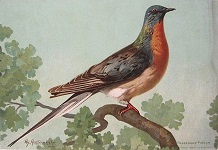
The Leverhulme Centre for Anthropocene Biodiversity (LCAB) brings together researchers from across disciplines to examine how the relationship between humanity and the natural world is changing. A central strand of the Centre’s research considers how cultural representations of human–animal relationships, ecological systems and ideals of wilderness shape our understanding of the Anthropocene—or the “age of the human.”
In his research as a Postdoctoral Research Associate at the Centre, Dr Peter Sands investigates how authors and filmmakers from the mid-twentieth century to the present explore concepts such as environmental catastrophe, extinction, and biotechnological futures. Peter’s project aims to show that, from countercultural thinking on the relationship between technological and ecological systems in the 1960s, to projections made by contemporary ecologists about future rewilded landscapes or resurrected species, what we think of as the Anthropocene has always been formed in a shared space of exchange between art and science.
In December 2022 with Dr Sarah Bezan, Peter organised the “Art and Science of Species Revival” symposium hosted by LCAB. Including an exhibition of work from artists Maria Lux and Ken Rinaldo, the symposium asked how the arts and humanities can aid in investigating not only the ethics of de-extinction science (the resurrection of extinct species through gene technologies), but how species revival is itself a creative pursuit concerned with imagining ecological futures and constituted by an exchange of artistic and scientific practices.
See archive of previous projects.