

Research
The York Cross-disciplinary Centre for Complex Analysis (YCCSA) is a wide and active collaboration across science departments (and beyond) at the University of York that has as its primary objective the development of novel mathematical and computational methods and tools for the analysis and modelling of complex systems drawn across engineering, physical, and biological sciences.
- YCCSA, through its members, supports (both in terms of space, personnel and equipment) a wide range of research into complex systems, including novel hardware and software engineering, and modelling of physical and biological complex systems at multiple levels of detail.
For YCCSA staff publications, visit the People page and follow the Google Scholar profile links.
Members of YCCSA are also involved in the York Computational Immunology Lab (YCIL), the Biological Physical Sciences Institute (BPSI), Interdisciplinary Centre for Narrative Studies (ICNS), York Robotics Laboratory (YRL), and the Science and Technologu Studies Unit
Current Research
MARA HERBIVORE NETWORK PROJECTThe Mara Herbivore Network Project is a collaboration between the University of Liverpool, the University of York, Kenya Wildlife Service and the Masai Mara National Reserve. The project is funded by Natural Environment Research Council (NERC) and supported by Fig Tree Camp. |
maxfacts.ac.uk
maxfacts.uk provides information on all aspects of the discipline of oral and maxillofacial surgery, from impacted teeth, orofacial pain, mouth ulcers, orofacial infections, trauma, to mouth and skin cancers. Some of these conditions will affect approximately 1 in 4 people in their lifetime. Link to main page
|
‘Dynamic ant networks: How environmental constraints and ecological context shape
|
SpInspiredSpInspired will develop a methodology for discovering and exploiting good natural computational models of material computing, and for determining appropriate basic units that are both mathematically rich (so that they can be composed and combined into higher order representations) and efficiently physically realisable (so that they can be exploited as powerful combinational devices in unconventional domains and applications).
|
Systemic Failure in FinanceThis project aims to develop a permanent international research network investigating key issues in finance for Official Development Assistance (ODA), such as systemic failure, to improve the delivery of finance to countries in receipt of ODA, reducing the risk of failure and increasing the opportunities for sustainable development. Such network will include experts from ODA donor and recipient countries, international organisations, policy-oriented institutions, practitioners, decision makers, scholars. Coordinated by University of York academics the network will produce research outputs to support policy / decision making on finance for ODA, proposals to fund research activities and knowledge exchange opportunities (workshops, yearly conferences).
|
Real Time Magnetic Resonance Imaging (MRI) of Swallowing and Speech in Patients Following Major Maxillofacial Surgery and ReconstructionThe project examines the mechanics of swallowing and speech by real-time MRI videos in order to improve the long-term post-operative quality of life of maxillofacial patients after major interventions. The first step taken in this project will establish the methodological framework in healthy volunteers.
|

Completed Research
| |
A graphical model approach to pedigree construction using constrained optimisation The project goal is to develop efficient methods for constructing family trees ('pedigrees') from DNA data. Accurate pedigrees are crucial in assessing genetic influences on disease. |
|
|
|
CellBranch - a toolset for exploring Stem Cell Differentiation and Pluripotency with Branching Process Theory |
|
|
|
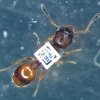 |
ACORN: Ant Collective Organisation in Robust Networks |
|
|
| Ecosystems Interactions - This proejct explores the policy implications of the interactions between ecosystems and other socio-economic systems in producing important services from which society benefits. |
|
||
| TRUCE - Training and research in unconventional computation in Europe. TRUCE is a Coordination Action supporting research under the FP7: Future and Emerging Technologies (FET) programme within the ICT theme. |
|
|
|
 |
NEMOG - New Business Models in the Digital Economy |
|
|
 |
emBRACE- Building Resilience Amongst Communities in Europe. emBRACE aims to improve the pan-European framing of resilience. Using interdisciplinary, socially inclusive and collaborative methods, it is developing conceptual and methodological approaches to clarify how the resilience capacity of communities confronted with natural hazards and disasters can be characterized, defined and measured. |
|
|
| EvoEvo - Evolution of evolution. Evolution is the major source of complexity on Earth, at the origin of all the species we can observe, interact with or breed. On a smaller scale, evolution is at the heart of the adaptation process for many species, in particular micro-organisms (e.g. bacteria, viruses...). Microbial evolution results in the emergence of the species itself, and it also contributes to the organisms' adaptation to perturbations or environmental changes. These organisms are not only organised by evolution, they are also organised to evolve. |
|
|
|
| The Evolution of Prolonged Post-reproductive Lifespan in a Non-Human Mammal |
|
|
|
| Interspecific Information Transfer as a Driver of Community Structure in Savanna Herbivores |
|
||
 |
Journeys in Non-Classical Computation |
|
CDTs
Centres of Doctoral Training
 |
CIDCATS: Combating Infectious Disease: ComputationalApproaches in Translational ScienceThis is a four-year PhD training programme that will provide students with in-depth knowledge of infectious diseases
The aim is to deliver the next generation of scientists who will drive quantitative biology to support interdisciplinary |
|
|
 |
IGGI: Intelligent Games and Games IntelligenceThe EPSRC Centre for Doctoral Training Intelligent Games and Games Intelligence (IGGI) is a The doctoral programme combines practical skills training with advanced teaching in cutting-edge research |
|