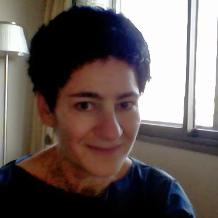
Professor Helen Hills
Professor Emerita
Visit Professor Helen Hills's profile on the York Research Database to:
- See a full list of publications
- Browse activities and projects
- Explore connections, collaborators, related work and more
Profile
Biography
Helen Hills is Professor Emerita of Architectural and Art History in the Department of History of Art at the University of York.
Her research interests include the inter-relationships between early modern colonialism and high-end art and culture; early modern silver & coloniality; baroque theory; architectural history and theory; architecture and feminism; religious devotion, social class, gender and sexuality; Naples and the Italian South; meridionalismo; affect and art; monastic architecture; architecture and the veil; materiality and miracles; post-industrial cities and urbanism.
Education and career
Helen Hills studied Modern History at the University of Oxford before turning to History of Art at the Courtauld Institute of Art in London (MA with Distinction) where she also did her PhD. Her doctorate study of inlaid marble decoration in Sicily later became her first book, Marmi Mischi Siciliani: Invenzione e Identità (Società Messinese di Storia Patria, 1999), the basis of a trajectory which includes over 70 articles and nine books including: Silver: Transformational Matter (Oxford University Press, 2023); The Matter of Miracles: Neapolitan Architecture and Sanctity (Manchester University Press, 2016). Invisible City: The Architecture of Devotion in Seventeenth-Century Neapolitan Convents, Oxford University Press, 2004 was awarded the Best Book Prize by the Society for the Study of Early Modern Women, USA; Weiss / Brown Award in support of outstanding works of scholarship of European culture pre-1700, The Newberry Library, Chicago.
Helen Hills’ first job was with ‘Zuriya’, a brilliant experimental African Theatre Company in South London. She taught at Queen's University in Canada (for nine months while completing her PhD), the University of North Carolina at Chapel Hill, USA and the University of Manchester, UK, before joining the History of Art Department at York (Anniversary Reader in 2005; promoted to Professor in 2008). She was the first woman professor of Art History at the University of York.
Recent awards
2022 British Academy Conference Publication Award for ‘The Matter of Silver: Trauma, Surface, Substance, Shimmer’, ed. H Hills
2021 British Academy Conference Award for ‘The Matter of Silver: Trauma, Surface, Substance, Shimmer’
2018-19 Leverhulme Research Fellowship for Silver: Surface and Substance
2017 Senior Visiting Fellow at Villa I Tatti, The Harvard Center for Italian Renaissance Studies, Autumn 2017
Academic profile
Helen Hills has published extensively in the field of architectural history and theory, baroque art and theory, gender and sexuality, and contemporary visual culture, including three scholarly monographs, six edited books and journal special issues, and numerous chapters and articles.
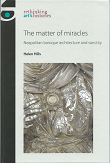
The Matter of Miracles: Neapolitan Baroque Architecture and Sanctity was published by Manchester UP in 2016.
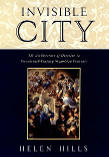
Invisible City: The Architecture of Devotion in Seventeenth-Century Neapolitan Convents (Oxford University Press, 2004) Best Book Prize in 2004 by the Society for the Study of Early Modern Women, USA.
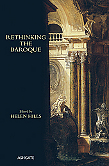
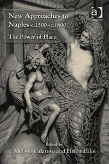
Rethinking the Baroque (Ashgate, 2011) offers essays by leading scholars from art history, philosophy, and literature studies to reconsider the potential of ‘baroque’; New Approaches to Naples (2013) offers a range of ways to come across Naples outside the usual paradigms formed elsewhere.
Hills founded and organized the Neapolitan Network, an exchange and meeting point for scholars of Neapolitan culture (traditionally neglected in the humanities) from all over the world which developed from an AHRC-funded Network and series of workshops in 2010/11.
Helen Hills is recipient of numerous distinguished research awards and scholarships from the AHRC, British Academy, the Leverhulme Trust and the Getty.
Keynote addresses and papers at conferences and research seminars from Adelaide in Australia, to Santiago in Chile, and Harvard in the USA.
Departmental roles
- Chair of Exams Committee (2019-21)
- Chair of Exceptional Circumstances (2019-21)
- Chair of Ethics Committee (2019-21)
- Director of Sculpture Studies Research School (2016-2018)
- Co-ordinator of Erasmus, Study Abroad, Global Programmes and Visiting Students (History of Art) (2016-2018)
- Director of Postdoctoral Research Fellows and Writing Competition (2015-17)
- University of York Athena Swan Committee and Forum Delegate (2016)
- Research Concordat Officer (2015-2016)
- Equality Champion (2015-2016)
- Equal Opportunities Officer (2015-2016)
- Research Mentor to Dr H. Vorholt
- Director, LFA-Art History Programmes (2013-2014)
- Chair, Departmental Research Committee (2006-2007, 2008-2012)
- Department Management Team Member (2008-2012)
- Library Officer (2006-07, 2008-09)
- Representative on Digitization programme (2007-09)
- Director of the Research School for Architectural History and Theory (2007-12)
University roles
- University Research Committee (2007-2010)
- University Research Forum (2007-2012)
- Advisory Committee for Arts and Humanities for Promotions (2010-2015)
- Research Concordat Officer (History of Art 2015-16)
Research
Overview
Principal research interests include:
- silver and Spanish colonialism in Latin America and southern Italy
- Baroque art and architecture, especially in Italy
- Baroque theory
- architectural history and theory
- feminism, gender, sexuality
- religion and art
- materiality and materials of art and architecture
- decoration/adornment and discourses of excess
- urbanism including post-industrialism in the UK
- southern Italy and meridionalismo
- the veil
- music and architecture
- affect and art
Distinguished visiting professorships
2014: Ruth and Clarence Kennedy Professor of Renaissance Studies at Smith College, Massachusetts. She took up this role, which involved giving public lectures and teaching an upper level undergraduate colloquium, in August to December 2014.
2010: Distinguished Visiting Professor at the University of Stockholm, Sweden
2013: Distinguished Visiting Professor: University of Boulder-Colorado, USA
2013: Emory University, USA
Books
Helen Hills has published extensively in her fields, including nine books and over 100 articles.
9) Helen Hills (ed), Silver: Transformational Matter, published for the British Academy by Oxford University Press, Proceedings of the British Academy 258, 2023, ISBN9780197267547. Helen Hills, ‘Introduction: Forging Silver Connections’, pp.1-18.
8) Hills, H., The Matter of Miracles. Neapolitan Baroque Architecture & Sanctity, Manchester University Press, 2016; 656pp; 72 b&w ills; 49 col. pls.
7) Calaresu M & H. Hills (eds), New Approaches to Naples 1500-1800: The Power of Place, Ashgate: 2013.
An outcome of AHRC-sponsored 'Exoticizing Vesuvius' Workshop Award. (‘provides a significant contribution to the study of Naples’s cultural history’ Renaissance Quarterly).
6) Hills, H., (ed.), Rethinking the Baroque, Aldershot: Ashgate, 2011. 243pp. 25 col. pls. 40 b&w ills.With essays by leading scholars from art history, philosophy, literature studies to reconsider the potential of ‘baroque’ (Mieke Bal, Andrew Benjamin, Howard Caygill, Tom Conley, Alina Payne). With support from the Paul Mellon Centre for Studies in British Art for the plates in colour.‘This book’s greatest contribution is that it prompts historians of Baroque art and architecture to look again at the term and its implications, and with the aid of Deleuze’s ‘fold’ reassess the period through the prism of its very construction and history as an archive worthy of study.’ (Burlington Magazine).'Rethinking the Baroque from a serious, scholarly point of view, is a well- needed enterprise, and this collection of essays by some of the most important thinkers of our time marvellously tackles the task. (Renaissance Quarterly). ‘Hills’s purpose in assembling such a vibrant and diffuse collection of essays on the baroque was to ‘trouble the smooth waters of a linear historicism’ (p. 91), and this collection certainly succeeds in doing that and building on Walter Benjamin’s complicating notions of historical time and the nature of fate, as well as expanding understandings of baroque culture and rejecting early modern pre-eminence.’ EV Devlin (Univ of Cambridge), The Seventeenth Century 28:1, 100-103: http://dx.doi.org/10.1080/0268117X.2012.760948
5) Invisible City: The Architecture of Devotion in Seventeenth-Century Neapolitan Convents, Oxford University Press, 268 pp.44 b. & w. & 10 col. plates. 2004. Best Book Prize, 2004, Society for the Study of Early Modern Women, USA; Weiss /Brown Award in support of outstanding works of scholarship of European culture pre- 1700, The Newberry Library, Chicago. Widely and favourably reviewed in academic journals in the UK, USA and Italy, including Napoli Nobilissima (‘indispensable’); Women’s Art Journal; Rivista Storica Italiana; Reviews of New Books (‘Hills’ extraordinary study is a nuanced and innovative incarnation of the secular city from its sacred recesses that should have broad appeal and wide-ranging influence. Invisible City is a brilliant, stunning book’); Church History (‘a very important exploration of the complex nexus between sacred architecture, gender relations, and lineage politics…wonderful’), Renaissance Quarterly; Confraternitas (‘a meticulously researched and well-crafted analysis of the complex interrelationships between gender, social class, and monastic architecture […] What results from this masterful synthesis is a model for excavating the complexities of premodern convent life and suggestions of intriguing possibilities for future research’), Urban History (‘pioneering’); and the Institute of Historical Research online book reviews (‘marvellously interesting’). Reviewers noted that the book will stimulate scholarship in its own and related fields and approaches.
Impact (a): This book formed the inspiration for Clausura Sconfinata, a performance of contemporary dance and early modern conventual music, directed by Julia Pond, performed by the prestigious New York dance company, the Isadora Duncan Dance Company and the Cappella Artemisia (an early modern music ensemble based in Bologna, Italy), world-premiered in Narni, Italy in 2009 and subsequently performed elsewhere in Italy.
Impact (b): This book is cited as inspiration for Sarah Dunant's award-winning novel Sacred Hearts (Virago, 2009) 'A masterfully created tale of convent life' (The Guardian).
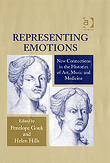
4) P. Gouk & H. Hills (eds), Representing Emotions: New Connections in the Histories of Art, Music and Medicine, Aldershot: Ashgate, 2005. ‘important […] well-ordered, well-edited, and contemplative about its role in the production of histories of emotions’ (Medical History), and as having ‘more riches here than I am able to describe’ (Sixteenth Century Journal).
3) Helen Hills (ed.), Architecture and the Politics of Gender in Early Modern Europe, Aldershot: Ashgate, 2003. ‘Pioneering’ in proposing that ‘the built environment is a more fruitful subject of enquiry for gender (than painting), arguing that architecture organises all aspects of life spatially through the body’ (Urban History). The Women’s Art Journal noted this collection as ‘innovative’, and that I brought together all the leading authors in this area.
2) M. Crinson, H. Hills, & N. Rudd, (eds.), Fabrications: New Art and Urban Memory in Manchester, Manchester: UMiM, 2002.
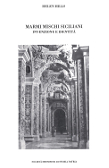
1) H Hills, Marmi Mischi Siciliani: Invenzione e Identità (Inlaid polychromatic marble decoration in early modern Sicily: Invention and identity), Società Messinese di Storia Patria, Scholarly monograph series, Messina, 1999. 457pp.
Funded Speakers to York
Helen was responsible for bringing to York Professor Joseph Connors, Director Villa I Tatti for the Patrides Lecture; Professor Andrew Benjamin (Monash University , Australia) as Distinguished Visiting Speaker in January 2011 and Professor Alexei Lidov, Distinguished Visiting Professor 1 May-30 June 2011.
Projects
In 2020 Helen Hills was awarded a prestigious British Academy Conference Award to hold an international conference on silver (at The Goldsmiths’ Company, London: 26-27 July 2021 — COVID-19 permitting). It will bring together scholars from across the humanities and social sciences, curators, silversmiths and artists to rethink the role of silver in the early modern world. Mined in the ‘New World’ in brutal conditions, silver came to coat the powerful elites of Europe with a shimmering carapace. In travelling from Potosí across the Atlantic Ocean to Europe, silver changed appearance, language, and disciplinary field — in short, it changes epistemologically — and the affect and politics of silver fall out of the picture in an inert ‘finished’ object. These scholarly effects are inter-related, and they are political in their conventional denial of a politics. The conference will lead to a book, edited by Hills, to be published by the British Academy.
A Leverhulme Research Fellowship for Silver: Surface and Substance (2018 to 2019) supported a new project investigating silver and its affective politics in relation to Spanish colonialism on both sides of the Atlantic.
Hills is participant in a multi-university interdisciplinary symposium series at the University of Michigan, New York University and Tulane University, on the topic of 'horror and enchantment' (PDF  , 250kb).
Grants
- 2021: British Academy Award for Publication: Edited volume (ed. H Hills),Silver: Transformational Matter British Academy / Oxford University Press Publication date: estimated Dec 2023
- 2020: British Academy Conference Grant Award (for international interdisciplinary conference on Silver)
- 2017-18: Leverhulme Research Fellowship
- 2017 Autumn: Senior Visiting Fellow: Villa I Tatti (Harvard Centre for Renaissance Studies)
- 2012-14: British Academy Small Grant (£9875)
- 2008-09: PI for AHRC Workshops Award ‘Exoticizing Vesuvius’ (Topography & Culture in Neapolitan History c.1500-present: with Dr M Calaresu, Cambridge)
- 2008-09: AHRC Research Leave Scheme Award 2008-09
- 2005-07: British Academy Research Readership
- 2003: Balsdon Fellowship, British School in Rome
- 2002: AHRB Matching Leave Award
- 2000-02: ‘Urban Memory in Manchester: the Fabrication of the Post-Industrial’, AHRB, £79,296. With Mark Crinson & Frank Salmon
- 1998-99: ‘Convent architecture, gender, and power’, J. Paul Getty Postdoctoral Fellow in the History of Arts and the Humanities
- 1998-99, Research Fellowship at the Centre Canadien d'Architecture. Awarded but declined
- 1997: ‘Mapping Early Modern Italian Cities: Maps as Inscriptions of Power’, Review Committee for Grants from the Endowment Committee of the College for Scholarly Publications and Performances, UNC-CH
- Many small awards from UNC-CH; University of Manchester and University of York
Supervision
PhDs Supervised and Awarded
Helen served on many PhD committees at the University of North Carolina at Chapel Hill, and supervised successful completion of PhD Baroque Examinations of a further 14 students. In the UK she supervised:
- Fabrizio Ballabio (EU student), 'Architecture & the dynamics of Bourbon Rule in Naples', WRoCAH funded, Sep 2017- present.
- Valeria Viola (EU student), Chapels in Aristocratic Domestic Residences in 18C Palermo'. Commenced Oct 2016. Viva Jan 2020. PhD awarded 2021.
- Maria-Anna Aristova, ‘The Problem of Ornament in Early Modern Architecture’. Commenced October 2014. Minor corrections. PhD awarded 2018.
- Bogdan Cornea, '"Why tear me from myself?": The Depiction of Flaying in the Art of Jusepe de Ribera': External Examiner Rose Marie San Juan (UCL): PhD Awarded 2015; University of York Humanities Research Centre Postdoctoral Fellowship: 2016-17
- Elizabeth Chew, PhD on 'Female art patronage and collecting in 17th-century Britain' (advisor 1995-99) Examinations passed 1995; PhD awarded Dec 1999. Now Curator at Thomas Jefferson Museum at Monticello, USA.
- Josephine Neil, 'Is a visual apophaticism at work in Spanish and Neapolitan Counter-Reformation Painting, and how did it influence the way divine presence and action was perceived?' Department of Theology and Religious Studies, King's College London. PhD co-supervisor with Prof. Ben Quash.
- Martin Nixon, ‘The Baroque Towns built in the Val di Noto Area of Sicily 1700-1780’. Awarded the 2011 John Fleming Prize for research in Eastern Sicily. PhD Awarded with minor corrections Sept 17
- Alex Pilcher, 'Mythologies of Foundation in Renaissance Florence, c.1450-c.1550', Feb 1998-Sep 1998 (PhD co-supervisor). PhD submitted Oct 98. PhD awarded 1999
- Alice Sanger, 'Women of Power: Studies in the patronage of Medici Grand Duchesses and Regentesses 1656-1650'. Feb 1998-May 1999 (submitted) (PhD co-supervisor ). PhD awarded 2000; now Lecturer at the Open University
- V. Whitfield, 'Portraiture of industrialists in 18thC Britain', temporary supervisor during illness of Prof. Marcia Pointon, Nov 00-Jul 01. PhD awarded Jun 02
- Alessandra Pompili, 'An insula in Ostia'. Aug 03-Feb 05 (PhD co-supervisor with Prof. R Ling). Awarded PhD Jul 07
- Charlotte Poulton, 'The representation of music in early modern Italian painting' (Part-time USA) Viva Examination Oct 2009: PhD awarded with minor corrections (External Examiner: Professor Robert Kendrick, Department of Music, University of Chicago). Lecturer in Art History, Brigham Young University
Publications
Selected publications
Helen Hills has published widely on baroque theory, Italian baroque architecture, urbanism, sculpture and painting, art and architecture of Naples, southern Italian art and its political, cultural, and academic marginalization; meridionalismo; the history of affect and emotions; gendered religious devotion and social class; women’s voices and architecture; postindustrial cities; architectural theory; reflections on the writing of architectural history; the operation of visual culture across early modern colonialism, including colonialism within Europe; sanctity and the forging of place.
Books
- Helen Hills (ed), Silver: Transformational Matter, published for the British Academy by Oxford University Press, Proceedings of the British Academy 258, 2023, ISBN9780197267547. Helen Hills, ‘Introduction: Forging Silver Connections’, pp.1-18. Contributions by Spike Bucklow, Tim Ingold, Allison Bigelow, Sergius Kodera, Kris Lane, Thomas Cummins, Elena Phipps, Richard Checketts and Maggie Boulton.
- The Matter of Miracles. Neapolitan Baroque Architecture & Sanctity, Manchester University Press, 2016; 656pp; 72 b&w ills; 49 col. pls. Read a review:
- New Approaches to Naples: The Power of Place, ed. Helen Hills & Melissa Calaresu, Ashgate, 2013. Read a review:
- Rethinking the Baroque, ed. Helen Hills (Aldershot: Ashgate, 2011). Read a review:
- Invisible City: The Architecture of Devotion in Seventeenth-century Neapolitan Convents, Oxford University Press, 268 pp.;44 b. & w. & 10 col. plates. 2005. Awarded the Weiss / Brown Award in support of outstanding works of scholarship of European culture pre-1700, 2003, The Newberry Library, Chicago; Winner of the Best Book Prize, 2004, Society for the Study of Early Modern Women, USA. Read a review:
- Representing Emotions: New Connections in the Histories of Art, Medicine, and Music, ed with P. Gouk, (Aldershot: Ashgate, 2005). Read a review:
- Architecture and the Politics of Gender in Early Modern Europe, (Aldershot : Ashgate, 2003). Read a review:
- Fabrications: New Art and Urban Memory in Manchester, ed. with N Rudd & M Crinson (Manchester : UMiM, 2002)
- Marmi mischi siciliani: invenzione e identità (Inlaid polychromatic marble decoration: invention and identity), trans. AnnaVio, Messina: Archivio Storico Messinese (Scholarly monograph series), 1999


Teaching
Undergraduate
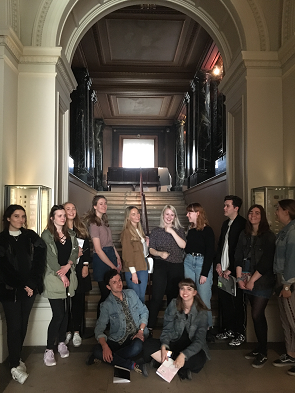
Helen's Objects in Focus class (2017).
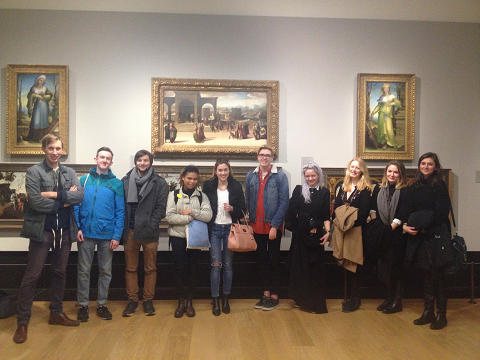
Helen's students from 'Critical Architecture' module in 2016.
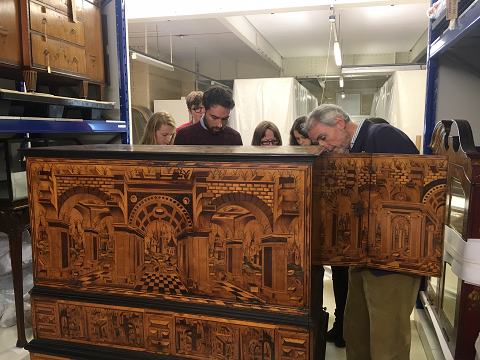
Helen's MA students examine baroque cabinets at the V&A.
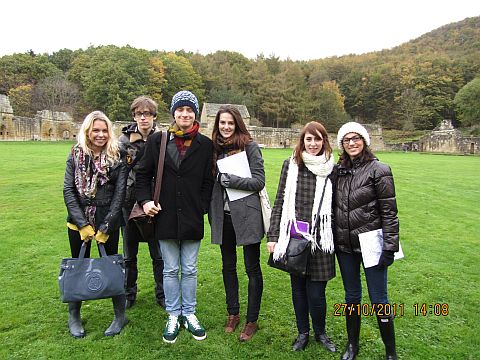
A group of upper level students at Mount Grace Priory during Helen's Architecture, Gender and Sexuality module.
Helen has taught at all levels at the Universities of Keele and Manchester in the UK, the University of North Carolina at Chapel Hill in the USA, and Queen’s University, Kingston, Canada.
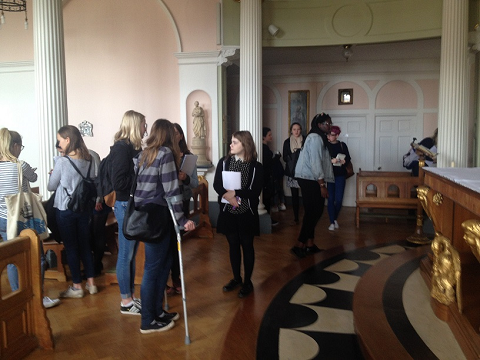
Students in Helen's Museology tutor group at the Bar Convent.
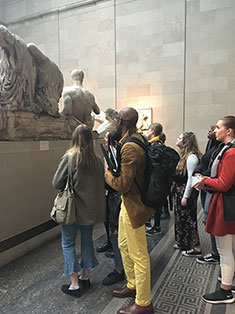
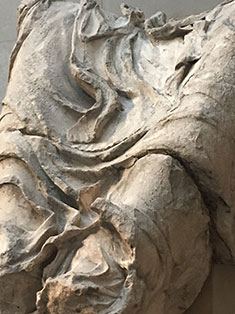
Students in Helen's Marble module observe the brush stroke of paint on the Parthenon marbles and enjoy their ravishing beauty. BM, April 2018.
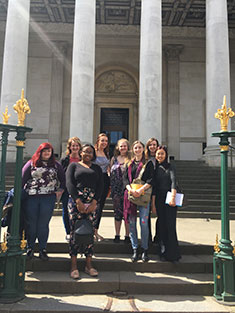
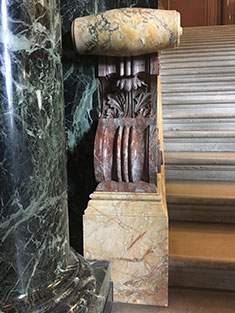
'Marble' seminar breaches a bastion of male class privilege. May 2018.
BA Undergraduate modules included:
- The City and the Subject in Early Modern Europe
- Architecture, Gender and Sexuality
- Critical Approaches to the Baroque
- Seeing the City
- Architectural Theory
- Architecture and Memory
- Historiography and Theory
- Introduction to Architecture
- Masculinities and Femininities in Baroque Art
- Space as Property and the Properties of Space
Postgraduate
MA modules included:
- Rethinking the Baroque
- Advanced Problems in Baroque Art
- Redeeming Matter
- Space as Property and the Properties of Space
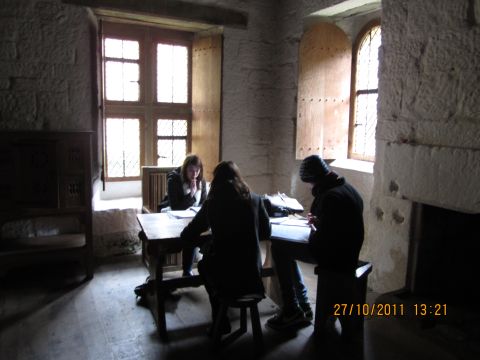
A group of upper level students at Mount Grace Priory during Helen's Architecture, Gender and Sexuality module.
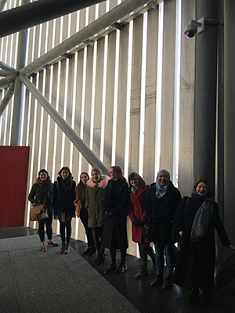
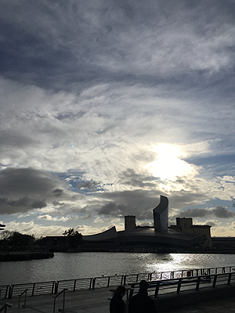
Critical Architecture MA Module, Field Trip to Libeskind's Imperial War Museum North, Manchester, Feb 2018.
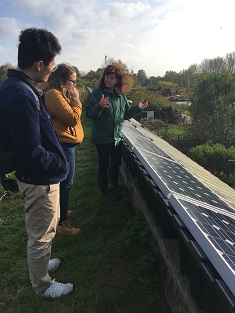
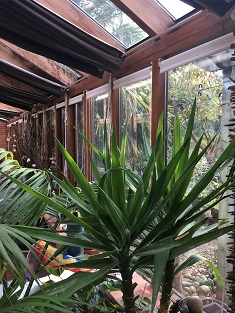
Visit by MA students in Helen Hills' Critical Architecture seminar to Hockerton Housing Project, a cutting-edge sustainability project established in 1998.
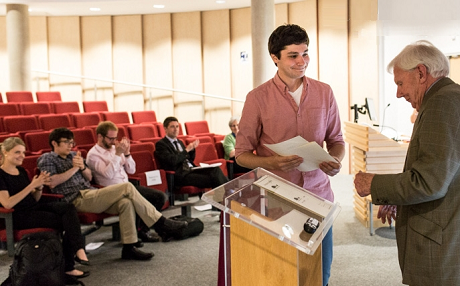
Bogdan Cornea, one of Helen's PhD students, receives a prize for his presentation on his PhD topic at the Humanities Research Centre, University of York, in July 2014 (photography Ian Martindale).
Other teaching
Visiting Professorships
- Visiting Professor, Department of History of Art, The University of Stockholm, Sweden: February 2008.
- Visiting Professor: Emory University, USA: April 2013.
- Smith College, USA: Ruth and Clarence Kennedy Professor in Renaissance Studies: September to December 2014.

Two of Helen's PhD students at a research event she ran at Compton Verney.
External activities
Editorial duties
- Consultant Editor of the Open Arts Journal (Open University Press): February 2013 - present
Scientific/advisory committees
- Founder member and Advisory Committee member: 2017 foundation to present: The Center for the Art and Architectural History of Port Cities at la Capraia, Naples: a partnership between The Edith O'Donnell Institute of Art History, University of Texas-Dallas, USA and the Museo e Real Bosco di Capodimonte, Naples, Italy
- Invited member of the international advisory board of book series Illuminating Women Artists: Renaissance and Baroque, to be published by Lund Humphries. Series Editors: Marilyn Dunn (Loyola University, Chicago) & Andrea Pearson (American University)
- Invited Scientific Advisory Committee Member, L'Officina di Efesto, a scholarly journal dedicated to all the arts, medieval-contemporary, in southern Italy and the Mediterranean (2018-present)
- International Scientific Committee: Grandi dimore: storia e conservazione publication series: Società Editrice Umberto Allemandi & C., Torino, Umberto Allemandi: direttore editoriale; Pietro Belli and Massimo Visone: coordinatori editoriali
- Scientific Committee: Arte - Architettura - Città e Territorio (with Alicia Cámara Muñoz (UNED – Madrid), Maria Concetta Di Natale (Università di Palermo), Marco Rosario Nobile (Università di Palermo), Dany Sandron (Université de Paris - Sorbonne)
Distinguished visiting professorships
- Robert Lehman Visiting Professor, Villa I Tatti, The Harvard University Center for Italian Renaissance Studies, Florence, Italy: Autumn Term 2017
- Ruth and Clarence Kennedy Professor in Renaissance Studies: Smith College, Mass., USA: Aug-Dec 2014
- Distinguished Visiting Professor University of Colorado-Boulder, USA:: 5-15 April 2014
- Distinguished Visiting Professor, Department of Art, Emory University, USA: April 2013
Lectures and research seminars
I have presented papers at many national and international conferences and institutions including:
Accademia Nazionale dei Lincei, Rome, Italy; CAA (USA); Association of Art Historians (GB); EAHN; Group for Study of Early Modern Women; South East College Arts Conference (USA); University of Essex, UK; the Courtauld Institute of Art, London; University of Warwick; University of Reading, UK; University of Oxford (Renaissance Research Seminar); University of Manchester, UK; University of Sussex, UK; Manchester Metropolitan University; Department of History of Art, University of Cambridge; University of Leeds (early modern Research seminar); University of Liverpool; Clark Institute, USA; University of North Carolina at Chapel Hill, USA; UCL-Courtauld Early Modern Research Seminar; University of Valenciennes, France; University of Stockholm, Sweden; University of Santiago, Chile; Palazzone Cortona (Harvard, Scuola Normale Pisa & EPHE, Paris), Italy; Universität der Künste, Berlin; V & A Museum, London; National Gallery, London; British School in Rome, Italy; Queen’s University, Canada; SE College Art Conference USA; Centro Internazionale di Studi sul barocco in Sicilia, Italy; Accademia Nazionale dei Lincei, Rome, Italy; Istituto Portugues do Patrimonio Arquitectonico, Lisbon, Portugal; Group for Early Modern Cultural Studies (Pittsburgh) USA; Università degli Studi, Palermo, Italy; Conference of Urban Historians, Berlin; Villa Le Balze (Georgetown University), Florence, Italy; Southern Methodist University, Dallas TX, USA; Roma Tre University, Italy; Ecole Française de Rome, Italy; Bibliotheca Hertziana, Rome, Italy; Università degli Studi, Bologna, Italy; La Sapienza, Rome; Antwerp University; Fondazione Valerio per la Storia delle Donne, Naples, Italy; Meadows Museum, Dallas, Texas (USA); Harvard University, USA; Duke University, USA; College Art Association (New York) 2013; Università degli di Studi di Palermo; University of Leicester; Emory University, USA; University of Adelaide (ARC Centre of Excellence for History of Emotions), Australia; La Sapienza-Swedish Institute & Accademia di San Luca, Rome, Italy; IHR, London; Royal Holloway, London; University of Colorado-Boulder, USA; Smith College, Mass., USA; Association of Art Historians (UEA); University of Leeds ; Voglia d'Italia, Barcelona; Feminist Readings Conference (Leeds); Open University (London); Wiesbaden Art Gallery & Museum (University of Mainz), Germany; Hull Literary and Philosophical Society (Hull Year of Culture, 2017); Musée Cognaq-Jay, Paris (Université Sorbonne Nouvelle; Université Paris Nanterre; Institut universitaire de France); Art Gallery & Museum Wiesbaden, Germany; Lancaster University, UK.
Research peer review
- Villa | Tatti application reviews 2018-present
- AHRC Peer Review Panel member (by invitation): 2010-2014; 2014-17; 2017-2021
- The Council for Social Sciences and the Humanities of the Netherlands, Organisation for Scientific Research (NWO): Peer review of Senior Grant Application 2017
- University of Pavia, Italy: "Blue Sky Research" proposals evaluation. 2017: International Peer Review by invitation.
- REPRISE International Peer Review: Research on architecture and urbanism ca.1400-present conducted by members of Italian universities. REPRISE is a database of expert reviewers, created by the Italian Ministry of Education, Universities and Research (MIUR), which brings together qualified experts from Italy and around the world in all fields of scientific enquiry. Selection panels draw on REPRISE to appoint peer-reviewers of research projects funded by MIUR or individual Universities (further information is available here: https://www.researchitaly.it/en/research-evaluation/).
- Netherlands Institute for Advanced Study, Amsterdam. Evaluator of research applications: 2017
- U.O.S. Ricerca Competitiva: Università degli Studi di Udine, Italy: International reviewer: 2017 (invited peer reviewer to evaluate applications for research grants).
- Agenzia Nazionale di Valutazione del sistema Universitario e della Ricerca: Valutazione della Qualità della Ricerca, Italy: 2016-17: for research published 2014-2015: GEV Area 08 Civil Engineering and Architecture: Invited International Member Peer Review
- Swedish Research Council Peer Review: 2015-16. This involves reading two or three large grant applications annually; and giving feedback on proposed initiatives in research funding
- International MIUR Member of Italian Research Evaluation (for Ministero dell'Istruzione, dell'Università e della Ricerca, Dipartimento per la Formazione Superiore e per la Ricerca, Direzione Generale per il coordinamento, la promozione e la valorizzazione della Ricerca): Architectural History & Theory. By invitation: 2012-13; 2013-14; 2014-15; 2015-16; 2017-18.
- University of Roma-La Sapienza, Department of History, Cultures & Religions: External Academic Advisor: Jan 2011-present. This involves offering constructive advice when the Department faces internal and external reviews or wishes to launch new initiatives.
- Irish Research Council: Invited Member of the International Assessment Board for Senior Research Awards. Apr. 2013; Apr. 2014; Apr 2015.
- Irish Research Council: Invited Member of the International Assessment Board for Postgraduate Awards. Oct 2013. April 2014; Apr 2015, Jan 2022.
- The Swedish Foundation for Humanities and Social Science Research. Riksbankens Jubileumsfond. Peer Review Appraiser, 2015.
- Czech Science Foundation: Invited expert assessor on early modern Bohemian topics for postdoctoral research awards: Jun-Jul 2013. This involved assessing 4 applications for large research grants.
- Croatian National Research Institutes: 2011: Panel Member of Research Quality Study. I was invited to serve as the expert Art Historian member of the international Research Quality panel to assess the Croatian National Research Institutes in Zagreb 23-26 May 2011
- Keith Sykes Research Fellowship, Pembroke College, University of Cambridge. Reviewer of Italian Renaissance/ Baroque Architecture application, Oct 2007
- Dutch Foundation for Scientific Research (NWO) Humanities Section, Reviewer: 2006-07
- J. Paul Getty Postdoctoral Fellowships in the History of Art and the Humanities. Member of review panel: 2002-03; 2003-04
Regular reader for
Art Bulletin
Art History
Eighteenth-Century Studies
Journal of Hispanic Studies
Journal of the Society of Architectural Historians (USA)
Konsthistorisk tidskrift
Object (UCL's Graduate Student Online Publication)
Sculpture Journal
The Sixteenth Century Journal
Cambridge University Press
Manchester University Press
Oxford University Press
Ashgate Publishing Company
Podcasts and media appearances
- Lecture as part of the Hull Year of Culture on 24 January 2016: http://www.hull-litandphil.org.uk/24th-january.html
- BBC Radio 4, ‘In Our Time with Melvyn Bragg’
- Member of a panel of three experts for discussion of ‘The Baroque’: 40 minutes (BBC estimate of audience: 4 million). 20 Nov 2008; repeated 21 Nov 2008. Podcast available: http://www.bbc.co.uk/programmes/b00fhp85
- One of 3 specialists talking about 'The Baroque' with Melvyn Bragg: In Our Time with Melvyn Bragg: 'The Baroque Movement', BBC Radio 4, 20 & 21 November 2008, (2009).
- BBC Radio 3, Night Waves
- Invited discussant for live broadcast (30 minutes) on the 'Baroque', as part of Radio 3's 'Baroque Spring' season: 20 March 2013. Podcast available: http://www.bbc.co.uk/programmes/b01r9q6r
- Helen was featured on Night Waves talking about the 'baroque' as part of Radio 3's "Baroque Spring".
- Radio Adelaide: Interview with Ewart Shaw. Interview lasting 45 minutes on the occasion of my keynote lecture at the Emotions & Rituals in Early Modern Europe conference held at the University of Adelaide, Australia. Feb 2014. Podcast available.
- Miraculous Affects: Inventing Corpses in Baroque Italy Miraculous Affects (PDF , 117kb) Opening Keynote Lecture, University of Adelaide Australia, February 2014 ; Centre for the History of Emotions, a Research Centre of Excellence funded by the Australian Research Council for 2011-17. The 2014 international collaboratory is on the theme of 'Emotion, Ritual and Power in Europe: 1200 to the Present': Emotions Make History
- Kennedy Lectures Series The Matter of the Baroque Smith College, Mass., USA 201 (PDF , 154kb)
- Lecture on Materiality and Art at a recent conference in London
- Interview by Ewart Shaw on Radio Adelaide (10 Feb 2014) talking about bloody miracles. Part of the interview is available here.
Performances
- Invisible City: The Architecture of Devotion in Seventeenth-Century Neapolitan Convents (Oxford University Press, 2004) inspired Clausura Sconfinata, a performance of contemporary dance and early modern conventual music, directed by Julia Pond, performed by the Isadora Duncan Dance Company (NYC) and the Cappella Artemisia (Bologna), performed in Narni, Italy in 2009
Curatorial experience
- Co-organizer & Co-curator, Fabrications: New Art and Urban Memory in Manchester. Included commissioning 6 new pieces of art from 6 contemporary artists. Cube Gallery, Manchester. 11 September - 2 November 2002
Conferences organised
- The Matter of Silver: Trauma, Substance, Surface, Shimmer
- International interdisciplinary symposium sponsored by the British Academy. Online via Zoom over three afternoons 26-28 July 2021 (speakers included Tim Ingold, Alison Bigelow, Spike Bucklow, Tom Cummins)
- Exoticizing Vesuvius? Formations of Naples, c.1500-present
- 3 AHRC Workshops in 2009: Principal Investigator with Dr M Calaresu, Cambridge: The Historical and Intellectual Formation of Neapolitan Historiography; Topography and Piety: Naples Afflicted; Objects of Collecting in Naples and Naples as Object of Collecting, 1708-2008
- Rethinking the Baroque
- University of York and Castle Howard, 5-7 July 2006
- Urban Memory in Manchester
- University of Manchester, September 2002
- Representing Emotions: evidence, arousal, analysis University of Manchester, 25-27 May 2001
- An international, interdisciplinary conference held at the University of Manchester in the Department of Art History, co-organized with Penelope Gouk. Sponsored by the British Academy, Wellcome Trust and the University of Manchester. This resulted in the edited volume 'Representing Emotions: New Connections in the Histories of Art, Music and Medicine' (Ashgate, 2005).
Workshops organized (selected)
- Servicing the Leisure Industries: What Future for Art History? (Feb 2018)
- The Edge of Sculpture 9 May 2017 University of York
- Patterning Pattern and Figuring the Decorative
- International interdisciplinary symposium, 6 May 2015, University of York. Co-organized by Helen Hills
- Naples at Compton Verney International interdisciplinary symposium, Compton Verney, 17 June 2015
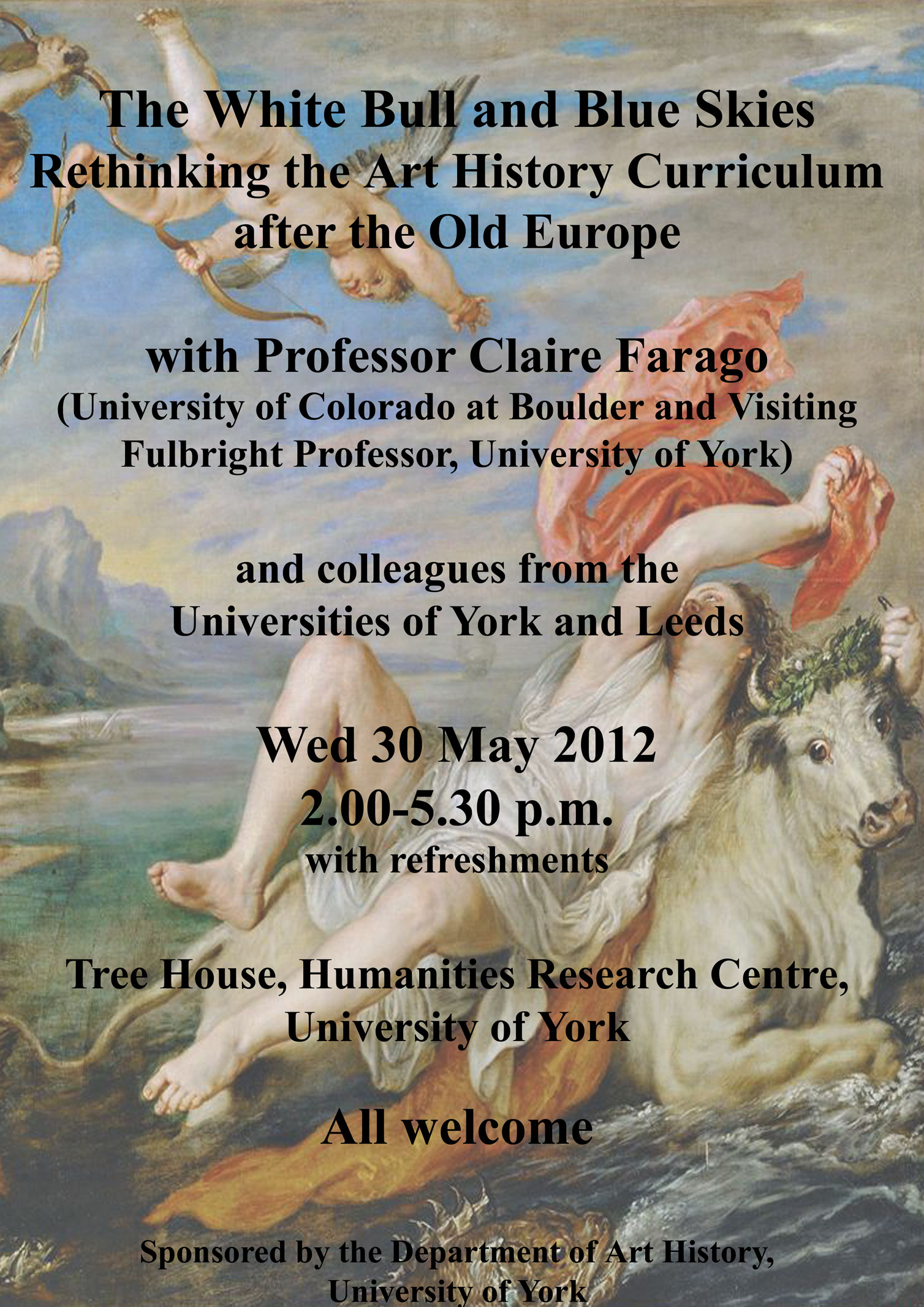
- The White Bull & Blue Skies: Rethinking the Art History Curriculum after the "Old Europe" University of York, May 2012.
- Patterning Patterns Poster (MS Word
 , 76kb)
 - Rethinking Holy Space Research Symposium With Professor Alexei Lidov and Dr Jas' Elsner. University of York: 22 June 2011
- As Director of the Architectural History & Theory Research School Helen organized these study days with visiting and internal speakers, University of York, 2005-2010:
 , 528kb)
 , 569kb)