

Henrice Altink
PGR Chair
Professor in Modern History
Visit Henrice Altink's profile on the York Research Database to:
- See a full list of publications
- Browse activities and projects
- Explore connections, collaborators, related work and more

Profile
Biography
BA (Zwolle), MA (Nijmegen / Lancaster), PhD (Hull)
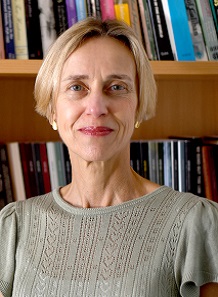
Henrice Altink is Professor in Modern History . She joined the department in 2004. Henrice has been actively involved with the Society for Caribbean Studies (SCS) and the Social History Society for many years, and served as deputy editor of Women’s History Review. Henrice’s main research focuses on social inequalities in the Caribbean. She has published books on gender and slavery; gender in the post-emancipation period, and race and colour discrimination during the era of decolonisation. Henrice has also worked on the history of medicine and health in the 20th-century Caribbean, in particular mental health, nutrition and TB; food and migration in South Africa; and small-scale gold mining in Africa. Her current work examines the intersection between social inequality and environmental vulnerability in Jamaica from 1945 to the present.
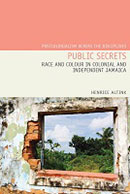
Her latest book looks at race and colour discrimination in Jamaica from 1918 till 1980. It not only maps the multiple and often covert forms of discrimination in a variety of settings – for example, work, education, and law - but also explores how they were discussed and the extent to which they were contested. Henrice has also worked on the history of medicine and health in the 20th-century Caribbean, in particular mental health, nutrition and TB. Her most recent work examines the intersection between social inequality and environmental vulnerability in the Caribbean.
Research
Overview
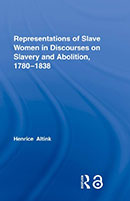
Henrice's research focuses on social inequalities in the Caribbean. Her first book Representations of Slave Women in Discourses on Slavery and Abolition, 1780-1838 (2007) examines representations of Jamaican slave women in pro- and antislavery writings.
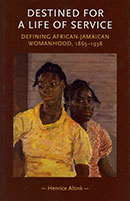
Her second book Destined for a Life of Service: Defining African Jamaican Womanhood, 1865-1938 (2011) looks at the lives of the second-generation of African-Jamaican women born in freedom and examines their engagement with messages about marriage, motherhood, sexuality, work and citizenship.
Her third book Public Secrets: Race and Colour in colonial and independent Jamaica (2019)explores different forms of race and colour discrimination in Jamaica between 1918 and 1980.
Funded by, among others, the Global Challenges Research Fund and the Rockefeller Foundation, Henrice has also published several articles on health and medicine in Jamaica.
Her most recent work focusses on the intersection between social inequalities (race, ethnicity, class, gender, age, and ability ) and environmental vulnerability in Jamaica since WWII. She has led a research network on risk and resilience in the coastal Caribbean and has been a Co-Investigator on several funded projects on environmental resilience in the Caribbean and Latin America.
Henrice is the co-founder of York’s Interdisciplinary Global Development Centre and has been a principal investigator and co-investigator on several Global South research projects, including two British Academy-funded Writing Workshops with Ghanaian universities. She is also the editor of Bloomsbury's A Cultural History of Slavery and Human Trafficking vol. 5, 1900-1945 (2024).
External Activity
Henrice was an executive member of the Social History Society, Women's History Network and Society for Caribbean Studies. She is a member of the AHRC peer review college and an assessor for the Commonwealth Scholarship Commission.
Supervision
Henrice Altink would welcome inquiries from those interested in postgraduate research into the modern history of the Caribbean. She particularly welcomes proposals that examine the process and/or impact of decolonisation. Those with an interest in the migration of Caribbean people to the UK are also encouraged to contact her.
Selection of MA dissertations supervised:
- Education in post-war Trinidad
- The 1937 labour riots in Trinidad
- The (lack of) modernisation in the Jamaican sugar industry, 1880-1918.
- Land settlement schemes in Jamaica, 1895-97.
- The Windrush on screen
- Difficult histories on film
Resources available for research students in York
The J.B. Morrell library provides an excellent starting point for the history of the British Caribbean. Besides surveys of Caribbean history and (e-)monographs on Caribbean history, it contains parliamentary papers which provide a wealth of information on the British Caribbean during both slavery and freedom. Various libraries and archives in London also hold information relating to the British Caribbean, including the British Library, the Institute of Commonwealth Studies, and The National Archives. In recent years, several Caribbean newspapers have put their archives online, such as the Jamaican Gleaner which goes back to 1834. And the still growing Digital Library of the Caribbean also holds some newspapers such as Abeng, a Black Power Movement paper, as well as a host of other relevant visual and textual sources. Henrice Altink has used the national archives and libraries in Jamaica, Barbados and Trinidad and the archival collection of the University of the West Indies and can provide you with contacts at these institutions. She also has extensive experience in the use of secondary data from such organisations as the World Bank, Inter-American Development Bank (IDB), Organisation of American States (OAS), and the Economic Commission for Latin America and the Caribbean (ECLAC).
Teaching
Undergraduate
Undergraduate
An example of modules taught:
HIS00100C Ending slavery and serfdom
HIS00151I Black Radicalism
HIS00157H From Colonial to Post-colonial States? The Twentieth-Century Caribbean
Postgraduate
HIS00221H Climate
Postgraduate
An example of modules taught:
The US and the Caribbean in the long twentieth century
Postgraduate
An example of modules taught:
Contact details
Student hours