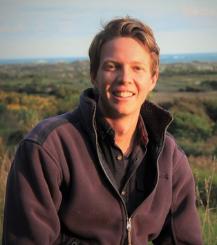
Dr Thomas Timberlake
Post-doc Researcher
Profile
Biography
I am an ecologist with an interdisciplinary research focus and a strong interest in the relationship between people and the ecosystems which they depend on. Using a range of methods from the natural and social sciences, I aim to understand the many ways in which people’s health and livelihoods are shaped by their surrounding ecosystems, particularly in agricultural settings. My previous research (University of Bristol) looked at the impact of pollinator declines on the nutritional health and livelihoods of smallholder farmers in Nepal and explored opportunities for enhancing nutrition and income by managing pollination services. Working closely with farmers, extension workers, researchers and policymakers, we co-designed a Pollinator Strategy which has been enacted by the provincial government in Nepal. My academic training includes a BSc in Biological Sciences (University of Oxford) and a PhD in pollination ecology (University of Bristol) where I investigated the relevance of phenology (seasonality) to pollinator conservation. Outside of academia, I have worked with the UK Collaborative on Development Research (UKCDR) in partnership with a range of funders, academics and development organisations to understand and strengthen the linkages between pollination and international development. I have also worked as an agroecology consultant for the UN Food and Agriculture Organisation (FAO) in Nepal and as a development researcher for Netflix Natural History documentaries
Research
Overview
Based in the Department of Environment & Geography, my research at the University of York takes a broad look at socio-ecological systems and aims to understand how people’s social, ecological, economic and political context shapes their vulnerability and adaptation to environmental change. My main role is on the TERRASAFE project (EU Horizon program) which works with local communities in southern Europe and northern Africa to co-design agroecological innovations that confront the growing threats of desertification. I am also co-leading a YESI Discipline-Hopping Fellowship developing an AI agroecological decision-support-tool for farmers, in partnership with Computer Sciences.
Publications
Selected publications
Regmi, B., Dahal, S., Poudel, S.R. & Timberlake, T.P., (2025). Native pollinators in Nepal: their importance, threats, and conservation needs. Global Ecology and Conservation, p.e03934. https://doi.org/10.1016/j.gecco.2025.e03934
Timberlake, T.P, Cirtwill, A., Sapkota, S., Bhusal, D., Devkota, K., Karki, R., Joshi, D., Saville, N., Kortsch, S., Baral, S., Roslin, T., & Memmott, J. (2024) Agricultural specialisation increases the vulnerability of pollination services for smallholder farmers. Journal of Applied Ecology. https://doi.org/10.1111/1365-2664.14732
Timberlake, T.P., Tew, N. & Memmott, J. (2024). Gardens reduce seasonal hunger gaps for farmland pollinators. Proceedings of the Royal Society B. https://doi.org/10.1098/rspb.2024.1523
Timberlake, T.P., Cirtwill, A.R., Baral, S.C., Bhusal, D.R., Devkota, K., Harris‐Fry, H.A., Kortsch, S., Myers, S.S., Roslin, T., Saville, N.M., Smith, M.R. & Memmott, J. (2022). A network approach for managing ecosystem services and improving food and nutrition security on smallholder farms. People and Nature, 4(2), pp.563-575. https://doi.org/10.1002/pan3.10295
Garibaldi, L.A., Gomez Carella, D.S., Nabaes, D.N., Smith, M.R., Timberlake, T.P. & Myers, S.S., (2022). Exploring connections between pollinator health and human health. Philosophical Transactions of the Royal Society B, 377(1853), p.20210158. https://doi.org/10.1098/rstb.2021.0158
Timberlake, T.P., Vaughan, I.P., Baude, M. & Memmott, J., (2021). Bumblebee colony density on farmland is influenced by late‐summer nectar supply and garden cover. Journal of Applied Ecology, 58(5), pp.1006-1016. https://doi.org/10.1111/1365-2664.13826
Timberlake T.P, Vaughan I.P. & Memmott J. (2019). Phenology of farmland floral resources reveals seasonal gaps in nectar availability for bumblebees. Journal of Applied Ecology. https://doi.org/10.1111/1365-2664.13403