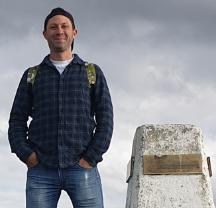
Dr Ben Keane
NERC Independent Research Fellow
Profile
Biography
I focus on carbon, nitrogen and phosphorus cycling in terrestrial ecosystems and how these cycles interact with global change, such as elevated carbon dioxide, temperature and drought. I have a particular interest in how biology controls fluxes of the greenhouse gases, carbon dioxide (CO2), methane (CH4) and nitrous oxide (N2O) which largely involves the interaction between soils, plants and the atmosphere.
In 2016 I graduated with a PhD in Biology from the University of York, developing new technologies to measure greenhouse gases from bioenergy crops. I then worked as a postdoctoral research associate at the universities of York, Sheffield and Manchester before returning to York as NERC Independent Research Fellow in 2025.
I have worked a wide range of ecosystems including peatlands, forestry, agriculture, grasslands and wetlands. I employ multiple approaches to conduct my research, ranging from laboratory experiments in controlled environments to field scale trials, using a wide diversity of techniques including microbiology, analytical chemistry and cutting-edge laser analysers in the Greenhouse gas flux laboratory here at the Department of Environment and Geography.
Research
Overview
Nitrous Oxide (N2O)
My current research project is the NERC IRF, Investigating biological uptake of nitrous oxide in soils. This is a five-year project focusing on soils which behave as sinks for the powerful greenhouse gas, nitrous oxide.
Nitrous oxide (N2O) is 265 times as powerful a GHG as CO2 and persists in the atmosphere for 120 years, meaning today’s N2O emissions will still be affecting the climate in five generations’ time. Given the ongoing trajectory of global GHG emissions, we already require negative emissions technology to limit global heating to 1.5ºC. Current understanding is that the only process that consumes N2O in soils occurs under extremely wet conditions when a proportion of N2O produced is converted to nitrogen gas and returned to the atmosphere. New technologies, however, have provided data which suggest that there may be a previously unknown biological process which consumes N2O in soils, under dry aerated conditions.
My focus is finding answers to: how N2O uptake occurs in soils; who is responsible; why these organisms take up N2O; where within the soil N2O uptake occurs; when it occurs and under what conditions and; how much N2O is drawn down.
Peatlands and Sphagnum moss
Peatlands store more carbon than any other terrestrial ecosystem and as a C sink they are vital to mitigating climate change. The keystone of many peatland ecosystems is Sphagnum, a bryophyte genus of ca. 350 species found on every continent except Antarctica. Sphagnum also hosts methanotrophs, microbes which can reduce peatland-associated methane (CH4) emissions. With climate change, many peatlands face increasing frequency and severity of drought. How Sphagnum responds to, and recovers from, drought will be key to sustaining peatlands over the coming decades. My previous work includes a field study of the greenhouse gas responses to the 2018 drought in a Swedish wetland, and an in-depth microcosm study of the response and recovery from drought in different Sphagnum species. I currently supervise a PhD studentship working on a drought and warming experiment at the Cors Fochno blanket bog in Wales. I am keen to develop projects designed to harness the properties of Sphagnum peatlands to deliver carbon storage and nature-based solutions to extremes of climate such as drought and flooding.
Sustainable agriculture
Agriculture faces challenges on multiple fronts. Its primary role to deliver food to a growing global population is hindered by plateauing crop yields, extremes of climate and inhibitory effects of pollutants such as pharmaceuticals. Modern agricultural practices directly contribute to some of these problems: years of intensive management has adversely affected soil health; nitrogen (N) fertiliser use drives emissions of the powerful greenhouse gas N2O and typical crop N uptake efficiency means approximately half the fertiliser doesn’t reach the target plant, causing further ecological problems such as biodiversity loss from eutrophication and atmospheric deposition. My aim is to use ecological processes to improve sustainability of food production, by maximising yields and reducing the detrimental effects of agriculture.
Publications
Selected publications
- Moir JWB, Toet S, Keane JB (2025). Nitrous oxide flux: what microbial physiology can do to mitigate climate change gas production. Advances in Microbial Physiology 87. doi: https://doi.org/10.1016/bs.ampbs.2025.04.001
- Keane JB, Shuttleworth EL, Evans MG, Ritson JPR, Harris A, Johnston A, Alderson DM, Clay GD (2025). Recovery of Sphagnum from drought is controlled by species-specific moisture thresholds. Scientific Reports 15, 22167. doi: https://doi.org/10.1038/s41598-025-05348-8
- Keane JB, Alderson DM, Clay GD, Evans MG, Field CD, Johnston A, Limpens J, McCarter CPR, Overtoom N, Ritson JP, Robroek BJM, Rochefort L, Shuttleworth EL, Telgenkamp Y, Turetsky MR, Waddington JM (2025). Tansley Review: The effects of drought on Sphagnum moss species, and the implications for hydrology in peatlands. New Phytologist 247, 5. doi: https://doi.org/10.1111/nph.70361
- Taylor CR, England L, Keane JB, Davies J, Leake JR, Hartley IP, Smart S, Janes-Bassett V, Phoenix, GK (2024). Elevated CO2 interacts with nutrient inputs to restructure plant communities in phosphorus limited grasslands. Global Change Biology 30. doi: http://dx.doi.org/10.1111/gcb.17104
- White JD, Ahrén D, Ström L, Kelly J, Klemedtsson L, Keane JB, Parmentier F-JW (2023). Methane producing and reducing microorganisms display a high resilience to drought in a Swedish hemi-boreal mire. JGR Biogeosciences. doi: 10.1029/2022JG007362
- Keane JB, Taylor CR, Leake JR, Hoosbeek MR, Miglietta F, Phoenix GK, Hartley IP (2023). Grassland responses to elevated CO2 determined by plant–microbe competition for phosphorus. Nature Geoscience. doi: https://doi.org/10.1038/s41561-023-01225-z
- Levy P, Clement R, Cowan N, Keane JB, Myrgiotis V, van Oijen M, Smallman TL, Toet S, Williams M (2022). Challenges in scaling up greenhouse gas fluxes: experience from the UK Greenhouse Gas Emissions and Feedbacks Programme. JGR Biosciences. doi: 10.1002/essoar.10509113.1
- Taylor CR, Janes-Bassett V, Phoenix GK, Keane JB, Hartley IP, Davies J (2021). Organic phosphorus cycling may control grassland responses to nitrogen deposition: a long-term field manipulation and modelling study. Biogeosciences 18, 4021–4037. doi: 10.5194/bg-18-4021-2021
- Keane JB, Toet S, Ineson P, Weslien P, Stockdale JE, Klemedtsson L (2021). Carbon dioxide and methane flux response and recovery from drought in a hemiboreal ombrotrophic fen. Frontiers in Earth Science. Special Issue: Wetland ecology and biogeochemistry under natural and human disturbance. doi: 10.3389/feart.2020.562401
- Keane JB, Hoosbeek MR, Taylor CR, Miglietta F, Phoenix GK, Hartley IP (2020). Soil C, N and P cycling enzyme responses to nutrient limitation under elevated CO2. Biogeochemistry 151, 221–235. doi: 10.1007/s10533-020-00723-1
- Myrgiotis V, Blei E, Clement R, Jones SK, Keane JB, Lee M, Levy P, Rees RM, Skiba UM, Smallman LT, Toet S, Williams M (2020). A model-data fusion approach to analyse carbon dynamics in managed grasslands. Agricultural Systems 184. doi: doi.org/10.1016/j.agsy.2020.102907
- Keane JB, Morison R, McNamara N, Ineson P (2019). Real-time monitoring of greenhouse gas emissions with tall chambers reveals diurnal N2O variation and increased emissions of CO2 and N2O from Miscanthus following compost addition. Global Change Biology Bioenergy 11, 1456-1470. doi :10.1111/gcbb.12653
- Keane JB, Ineson P, Toet S et al., (2018). Greenhouse gas emissions from the energy crop oilseed rape (Brassica napus); the role of photosynthetically active radiation in diurnal N2O flux variation. Global Change Biology Bioenergy 10, 306–319, doi: 10.1111/gcbb.12491
- Keane JB & Ineson P (2017). Technical note: Differences in the diurnal pattern of soil respiration under adjacent Miscanthus × giganteus and barley crops reveal potential flaws in accepted sampling strategies. Biogeosciences 14, 1181-1187. doi:10.5194/bg-14-1181-2017