
English and Related Literature

Current PhD Students
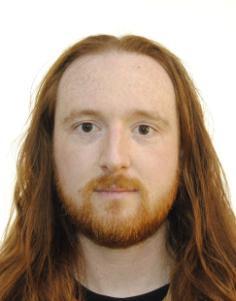
James Lapping
Thesis Title:
The Emerging Indigenous Mainstream.
Supervisor:
Professor David Stirrup
Description:
Since 2021, a significant body of work involving Indigenous producers, directors, writers, and actors entered the mainstream of film and television. Filmmakers such as Sterlin Harjo (Seminole/Muscogee Creek), creator of Reservation Dogs (2021-2023) and The Lowdown (2025-), and Sydney Freeland (Navajo), executive producer and director of Echo (2024 miniseries) and screenwriter of Rez Ball (2024), have found significant critical and commercial success producing films and television shows for global streaming platforms Disney+ and Netflix. Other productions have been significant firsts for Indigenous productions in the mainstream, such as Rutherford Falls (2021-2022), a series that marked Sierra Teller Ornelas (Navajo) as the first ever Indigenous showrunner, and Prey (2022), a film that was the most-watched premiere on Hulu upon its release.
The role of celebrity has also had a major impact on Indigenous representation in the mainstream. Actor Lily Gladstone (Blackfeet) made history as the first Native American woman to receive a Golden Globe Award and an Oscar nomination for her role as Mollie Burkhart in Killers of the Flower Moon (2023). Through her success, she has been able to combine her role of celebrity with cultural activism, bringing awareness to issues such as Missing and Murdered Indigenous Peoples, the abuses of the residential school system, and the attempts to reintroduce buffalo onto Blackfeet territory.
Furthermore, non-Native director and screenwriter Taylor Sheridan has also bought Indigenous issues to the forefront in his film Wind River (2017) and his subsequent television shows Yellowstone (2018-2024), 1883 (2021-2022 miniseries) and 1923 (2022-2025). Sheridan, however, has received much criticism from Indigenous communities and complicates the understanding of what is and isn’t an Indigenous Mainstream production.
This project makes the claim for an emerging movement of film and television called the Indigenous Mainstream. This zeitgeist moment for Indigenous film and television is particularly significant for its emergence into an industry that has significantly underrepresented Native American filmmakers and actors throughout history. This project asks key questions about the emerging Indigenous Mainstream. What is the significance of this emerging body of work within mainstream film and television? How do Indigenous producers, directors, writers, and actors and their heightened visibility in the mainstream impact representations of Indigeneity to both Indigenous and non-Indigenous audiences? What industry practices can be activated by filmmakers, both Indigenous and non-Indigenous, to ensure that stories that centre Indigenous characters and narratives are authentic, accurate, and not insensitive to Indigenous communities? And how can this be achieved in an arena that has historically and systematically erased an Indigenous presence?
James holds a BA in American Studies from the University of Derby and an MA in American Studies from the University of East Anglia. He completed the first year of his PhD at the University of Kent before transferring to the University of York in September 2023 where he is a member of the Centre for Indigenous and Settler Colonial Studies.
James is also a journalist and has contributed to the student newspaper - Nouse. He has written about film, television, music, and popular culture.
Email: gqr515@york.ac.uk