Start a career where you can make a real difference to people's lives
Year of entry: 2024 (September)
Join us online or in person to find out more about postgraduate study at York.
Upcoming eventsComplete University Guide 2024
Times Higher Education’s ranking of the Research Excellence Framework 2021
Develop yourself with a qualification that allows you to apply to register as a social worker.
Discover a career where you can make a real difference to the quality of people's lives.
This course offers you both a Masters degree and a professional qualification. Our course lasts two years and will equip you with the skills and knowledge you'll need for effective professional practice as a social worker. It is suitable for graduates from a wide range of disciplines who are committed to a career helping people.
You'll focus on professional practice and take part in two placements in different areas of social work.
You will also gain skills and specialist knowledge that would be suitable for a wide range of careers in social work.
After completing this Masters degree you'll be eligible to apply to join the register as a social worker with Social Work England.
Current demand for professionally qualified social workers is strong in the statutory and voluntary sectors.
The course will introduce you to core areas of social work knowledge, skills and practice. You will:
You'll focus on the practice of social work, and undertake two placements in different types of practice. The placements allow you to experience contemporary social work, with the guidance of a qualified social worker.
On your placements, you will work with a wide range of service user groups, such as vulnerable adults, children and families, young people, people with learning disabilities or people with mental health needs. You can complete a placement in a variety of settings, including within Local Authorities or within independent organisations working with drug and alcohol services, housing agencies, domestic violence, advocacy, or other social care and welfare services. You will spend 170 days on placement, and complete 30 skills days which are integrated into modules throughout the course.
Before starting a placement that forms part of your course, you are likely to be asked by the placement provider to sign a confidentiality agreement. This is to ensure that you do not disclose any information that is confidential to the placement provider.
In the first half of Year 1 you'll prepare for your first statutory placement with a range of core modules which ensure you're ready for practice. You will explore the ethical, legal and policy contexts for social work, which will equip you to manage the competing pressures of social work practice.
You will take the following modules:
The placement lasts for 70 days, after completion of a module designed to support your professional development.
This counts towards the 200 days of practice which you must complete before you can register as a social worker. You will spend 70 days at a social work agency as well as Skills Days at the University, developing specialist techniques for working with individuals, families and groups.
You will work with a qualified social work practice educator who will support and assess you throughout the placement. Your placement is a chance to develop and follow your own professional interests, with guidance from our academic staff.
As part of your placement report you will complete written work which will evidence how you have brought the knowledge gained in the classroom into your professional practice.
As part of your second year you'll undertake your final statutory placement which will take 100 days.
Throughout the year you'll work on your Masters dissertation. This is a 16,000-word extended essay based on your own original research. You'll work with your supervisor to choose a topic which interests you and design an empirical study or systematic literature review to explore your research question in depth.
You will take the following modules:
This counts towards the 200 days of practice which you must complete before you can register as a social worker. You will spend 100 days at a social work agency, developing skills for career-long learning, self-care and leadership.
Our modules may change to reflect the latest academic thinking and expertise of our staff.
Throughout Year 2, you'll work on your dissertation. This is a 16,000-word extended essay based on your own original research. You will work with your supervisor to choose a topic which interests you and design an empirical study or systematic literature review to explore your research question in depth.
The dissertation will allow you to demonstrate your skills in research as well as applying insights from the taught modules and your placement experience.
Examples of recent dissertation titles include:
Every course at York is built on a distinctive set of learning outcomes. These will give you a clear understanding of what you will be able to accomplish at the end of the course and help you explain what you can offer employers. Our academics identify the knowledge, skills, and experiences you'll need upon graduation and then design the course to get you there.
| Study mode | UK (home) | International and EU |
|---|---|---|
| Full-time (2 years) This is the year 1 fee. Fees for future years are subject to confirmation. |
£9,540 | £23,900 |
Students on a Student Visa are not currently permitted to study part-time at York.
For courses which are longer than one year, the tuition fees quoted are for the first year of study.
UK (home) or international fees? The level of fee that you will be asked to pay depends on whether you're classed as a UK (home) or international student. Check your fee status.
Find out more information about tuition fees and how to pay them.
You will require a DBS check to take part in this course. You will pay £40 at the beginning of your course and a £13 update fee in subsequent years.
You will be responsible for travel costs to placements but can apply for an NHS Bursary to meet these costs (British citizens only). Some agencies may reimburse travel costs.
Course books will be available to you from the Library either in print or online format - new copies, if you wish to buy them, usually cost around £30. All other teaching resources will be available online.
Discover your funding options to help with tuition fees and living costs.
We'll confirm more funding opportunities for students joining us in 2024/25 throughout the year.
If you've successfully completed an undergraduate degree at York you could be eligible for a 10% Masters fee discount.
Each year the NHS funds a number of students on our Social Work courses. For students on the MA in Social Work this bursary may contribute toward your tuition fees.
You can use our living costs guide to help plan your budget. It covers additional costs that are not included in your tuition fee such as expenses for accommodation and study materials.
You’ll work with world‐leading academics who’ll challenge you to think independently and excel in all that you do. Our approach to teaching will provide you with the knowledge, opportunities, and support you need to grow and succeed in a global workplace.
You'll learn through a blend of classroom-based and practice-based activities, including:
Your lectures, seminars and tutorials will be delivered by enthusiastic and knowledgeable academic staff who are experienced practitioners. Guest speakers with specialist expertise, including service users from our Service User and Carer Participation Advisory Group, will also contribute to your learning.
You will develop your knowledge and understanding with focused and guided reading and group work. For some modules you'll undertake online activities to support your learning beyond the classroom.
We are part of the Yorkshire Urban Rural Teaching Partnership, working closely with local councils and the University of Huddersfield. The partnership collaborates to develop, inspire and sustain highly-skilled and confident social workers to improve outcomes for children, adults, families and communities. Through our work with the Teaching Partnership, we ensure that our students are well prepared for social work practice, receiving an excellent range of learning opportunities and an understanding of best practice.
You'll be based in the School of Business & Society in the Church Lane Building on Campus West. The majority of your teaching will be in Derwent and Alcuin Colleges on Campus West.
Our beautiful green campus offers a student-friendly setting in which to live and study, within easy reach of the action in the city centre. It's easy to get around campus - everything is within walking or pedalling distance, or you can always use the fast and frequent bus service.
Types of assessment in this course include:
You'll also submit work that won't contribute to your final grade. This allows you to get feedback on your progress and understanding before you submit assessed work.
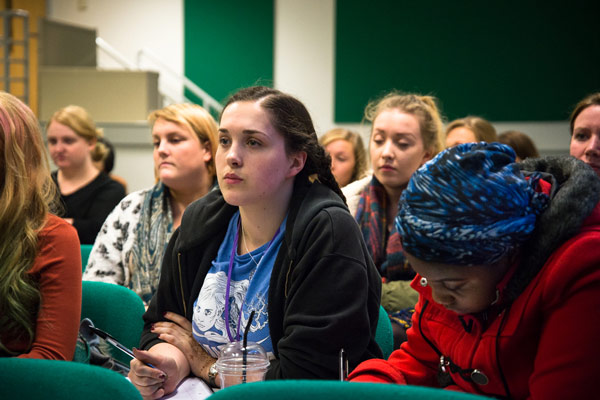
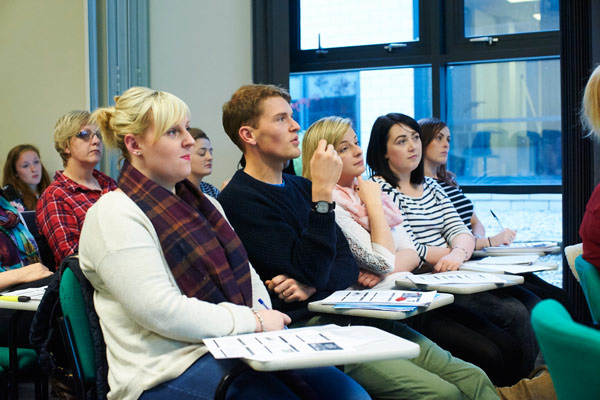
Postgraduate social workers from York are in high demand and you will be very well placed in terms of employment prospects. We have a 100% employment rate for graduates from out social work programmes. To find out more about social work, please visit the British Association of Social Workers website, where there is information including from the International Federation of Social Work.
You'll develop a range of transferable skills throughout the course, including:
| Typical offer | |
|---|---|
| Undergraduate degree | 2:1 or equivalent |
| Other international qualifications | Equivalent qualifications from your country |
Grade 4 (C) in GCSE English or an equivalent qualification. An offer of a place will also be subject to a satisfactory Disclosure and Barring Service (DBS) check and a satisfactory health declaration.
Experience of working in social care, health care or any related field, including voluntary work, or direct experience of service provision, is essential.
If English isn't your first language you may need to provide evidence of your English language ability. We accept the following qualifications:
| Minimum requirement | |
|---|---|
| IELTS (Academic and Indicator) | 7.0, with a minimum 7.0 in each component |
| Cambridge CEFR | C1 Advanced: 185, with a minimum of 185 in each component |
| Oxford ELLT | 8, minimum of 8 in each component |
| Duolingo | 130, minimum 130 in each component |
| GCSE/IGCSE/O level English Language (as a first or second language) | Grade C |
| PTE Academic | 67, with a minimum of 67 in each component |
| TOEFL | 96 overall, with a minimum of 24 in each component |
| Trinity ISE III | 120 overall, with a minimum of 120 in each component |
For more information see our postgraduate English language requirements.
You may be eligible for one of our pre-sessional English language courses. These courses will provide you with the level of English needed to meet the conditions of your offer.
The length of course you need to take depends on your current English language test scores and how much you need to improve to reach our English language requirements.
After you've accepted your offer to study at York, we'll confirm which pre-sessional course you should apply to via You@York.

We offer a range of campus accommodation to suit you and your budget, from economy to premium.

Explore campus and city life and hear what our current students have to say about living here.

Lively, full of culture and beautiful, York is regularly voted one of the best places to live and visit in the UK.

Find out more about York. Chat to staff and students and take the tour, on campus or online.