Develop your understand of existing and emerging technologies
Year of entry: 2024 (September)
Join us online or in person to find out more about postgraduate study at York.
Upcoming eventsWith improved access to the internet we have become more connected to each other and to what is happening in the world around us.
At the same time social media and information applications are transforming business.
This course will give you an understanding of existing and emerging technology and the ability to assess the impact of social media on commercial, public, and third sector organisations in the UK and worldwide.
The course is taught by experts from the Department of Sociology and School for Business and Society, combining experience from the forefront of sociological and business research.
Our staff are world-leading experts, and this translates directly to our postgraduate teaching.
Gain skills in digital social research and management that are highly valued by employers.
 Social media is quite a new area providing the chance to explore and discover new research areas, while management offers organisational knowledge which I feel is important for future career development.Chengsi
MSc Social Media Management
Social media and information applications are transforming organisational development, competitiveness and flexible working. From raising a company’s profile to improving client and customer relations, this rapidly evolving sector has already affected the way many businesses work. The potential for further change is huge.
You'll develop business awareness and explore the history of organisations, their environments, and the ways in which both have changed. You'll examine how digital information communications technology (ICT) is managed, and learn to identify and analyse the key innovations made possible by new media. You will investigate new methods of digital data analysis and explore the opportunities and challenges presented by the availability of these new data forms.
This course is not associated with a specific Study Abroad programme, but York offers a number of options through international partnering programmes.
Core Modules
You will take core modules which may include:
Our modules may change to reflect the latest academic thinking and expertise of our staff.
You will develop, design, implement and manage your own original research project, supervised by a member of staff with the relevant experience for your topic. You will analyse the data and produce a 10,000-word dissertation based on your research project.
Examples of previous dissertation titles include:
Every course at York is built on a distinctive set of learning outcomes. These will give you a clear understanding of what you will be able to accomplish at the end of the course and help you explain what you can offer employers. Our academics identify the knowledge, skills, and experiences you'll need upon graduation and then design the course to get you there.
| Study mode | UK (home) | International and EU |
|---|---|---|
| Full-time (1 year) | £10,590 | £23,900 |
Students on a Student Visa are not currently permitted to study part-time at York.
UK (home) or international fees? The level of fee that you will be asked to pay depends on whether you're classed as a UK (home) or international student. Check your fee status.
Find out more information about tuition fees and how to pay them.
Discover your funding options to help with tuition fees and living costs.
We'll confirm more funding opportunities for students joining us in 2024/25 throughout the year.
If you've successfully completed an undergraduate degree at York you could be eligible for a 10% Masters fee discount.
You can use our living costs guide to help plan your budget. It covers additional costs that are not included in your tuition fee such as expenses for accommodation and study materials.
You’ll work with world‐leading academics who’ll challenge you to think independently and excel in all that you do. Our approach to teaching will provide you with the knowledge, opportunities, and support you need to grow and succeed in a global workplace.
You'll spend time working on your own, reading assigned texts and researching supporting materials, as well as working with others in seminars to discuss readings in a group and present your work. A member of the teaching staff will act as your supervisor throughout the degree, to help guide your studies and monitor progress.
You'll also attend seminars from visiting scholars on a wide variety of sociological topics.
You will be based in the Department of Sociology on Campus East. Most of your contact hours will be on Campus East.
Our beautiful green campus offers a student-friendly setting in which to live and study, within easy reach of the action in the city centre. It's easy to get around campus - everything is within walking or pedalling distance, or you can always use the fast and frequent bus service.
Core modules will be assessed by a mixture of ‘open’ essays (where an assignment is prepared in your own time) and presentations. Open assessments are released early in the term so you can select one or more essay titles to read around the topic and plan your chosen essay.
Towards the end of your studies, you'll complete a 10,000-word dissertation on an original piece of your own research.


The programme helps students to develop excellent employability skills that they can utilise in a range of different future careers. Throughout the programme, students are encouraged to develop their critical thinking and to work ethically, are equipped with opportunities to source and evaluate information, and to engage in personal reflection. Students are also given opportunities to demonstrate their knowledge and understanding of key criminological issues, and to communicate complex ideas in a range of written and verbal formats that are also relevant for and used in the contemporary workplace.
| Typical offer | |
|---|---|
| Undergraduate degree | 2:1 or equivalent in a social science or management/business studies-related discipline. Highly qualified students from non-social science disciplines such as computer science are also encouraged to apply. |
| International pre-masters programme | Pre-masters from our International Pathway College |
| Other international qualifications | Equivalent qualifications from your country |
If English isn't your first language you may need to provide evidence of your English language ability. We accept the following qualifications:
| Minimum requirement | |
|---|---|
| IELTS (Academic and Indicator) | 6.5, minimum 6.0 in each component |
| Cambridge CEFR | B2 First: 176, with 169 in each component |
| Oxford ELLT | 7, minimum of 6 in each component |
| Duolingo | 120, minimum 105 in all other components |
| LanguageCert SELT | B2 with 33/50 in each component |
| LanguageCert Academic | 70 with a minimum of 65 in each component |
| KITE | 459-494, with 426-458 in all other components |
| Skills for English | B2: Merit overall, with Pass with Merit in each component |
| PTE Academic | 61, minimum 55 in each component |
| TOEFL | 87, minimum of 21 in each component |
| Trinity ISE III | Merit in all requirements |
For more information see our postgraduate English language requirements.
You may be eligible for one of our pre-sessional English language courses. These courses will provide you with the level of English needed to meet the conditions of your offer.
The length of course you need to take depends on your current English language test scores and how much you need to improve to reach our English language requirements.
After you've accepted your offer to study at York, we'll confirm which pre-sessional course you should apply to via You@York.

We offer a range of campus accommodation to suit you and your budget, from economy to premium.

Explore campus and city life and hear what our current students have to say about living here.

Lively, full of culture and beautiful, York is regularly voted one of the best places to live and visit in the UK.
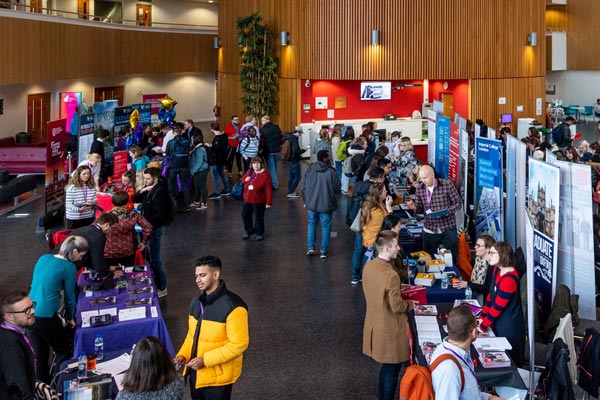
Find out more about York. Chat to staff and students and take the tour, on campus or online.