

My lack of relevant experience made me somewhat apprehensive at the start of the MA. I quickly learnt that I shouldn't have worried, and thoroughly enjoyed the whole year of study. I have been able to find some work through contacts made at the Centre, and based on my dissertation - I am currently doing research for the Overseas Development Institute, the UK's leading development think tank. The lessons of good practice and research skills learnt at the Centre have proven invaluable in my research work.
Katie Rosenthal, MA student 2010-11

I recently started working for an NGO dealing with refugees in Turkey and I am responsible for the coordination of an EU-funded project. I have already realised the importance of our MA modules, especially Defending Human Rights. The skills learnt in this module are exactly what I need to be doing in my new job. As a result I have the practical skills needed to run the project I am responsible for. I think that the modules I took during the MA also helped me to get this job.
Simge Memisoglu, MA student 2010-11

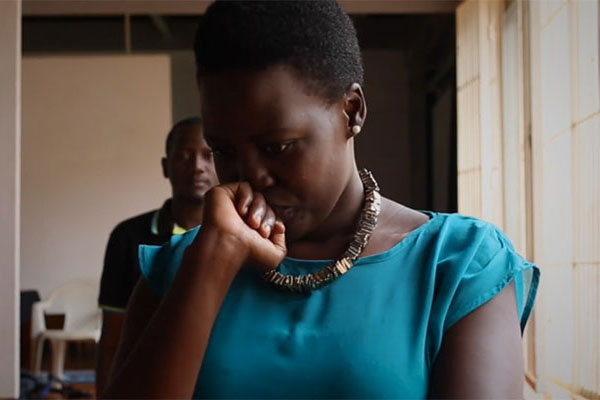
Images by Human Rights Watch, Ugandan Elections 2006
The first group of students to take the MA in Applied Human Rights arrived in York in October 2008. Diverse student cohorts came from a range of academic backgrounds, practitioner experiences and interests.
The MA focuses on the use of rights discourse and tools within the human rights mainstream and in a range of related fields (development, humanitarianism, conflict transformation, the environment, public health etc.). As such, it is designed for practitioners and would-be practitioners across this spectrum who wish to engage with applied human rights. The MA will address a paradox. Human rights is currently subject to critique on familiar territory, such as civil liberties in the post 9/11 era, and is expanding rapidly into new areas such as those detailed above. This context provides exciting new opportunities and fundamental challenges. There is a need to adjust our understanding of human rights, and human rights defenders, accordingly.
The MA in Applied Human Rights is distinctive in five main ways:
The MA structure has three components: compulsory modules, and an inner and outer ring of options. In total, students need to complete five modules (two compulsory, in the first term; one compulsory, running over two terms; two options in the second term). A dissertation will fulfill the requirements for an MA. This structure has been chosen so as to maximize the choice available to students, but to guide the selection process in a constructive way eg: indicating where modules are practice-based and where they are not.
Continuous assessment of applied skills is a feature of the programme.
The MA is offered on a full time and part time basis. Part time students complete two compulsory modules ( ‘social sciences and human rights practice ’ and ‘ law, public policy and human rights ’ : term one) and one optional module (term two) in their first year. In year two, part time students enrol for the ‘ defending human rights ’ compulsory module and their second optional module. They also go on the field trip and complete their dissertation.