

This evaluation explored the role that tutor status plays in determining cognitive and affective outcomes during peer tutoring in primary school mathematics. The project was supported by an award from the ESRC (Economic and Social Research Council), which ran from 18 months from May 2009.
The aims and objectives of the study were:
The peer tutoring technique used in this evaluation is called Paired Maths, a form of structured interaction between pupils. Research took place in 20 primary schools spread throughout Falkirk, Stirling and Dundee City Councils, and a pre-post design recorded changes and tracked outcome measures and variables. Control groups did not form part of this study. This was the first study to examine the predictive nature of tutor status on outcome measures. It was conducted jointly with Professor Keith Topping (University of Dundee), and was funded for 18 months from May 2009.
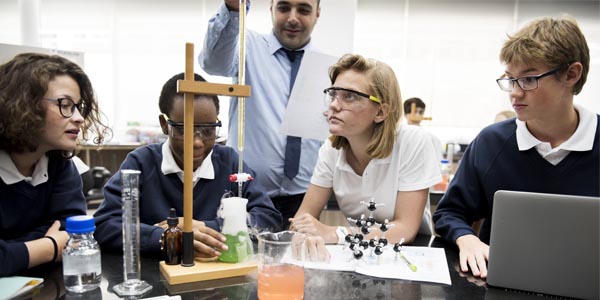
A very important part of school and later life is working with and helping other people. Peer Learning calls for children to help other children learn. Pupils work together in pairs with a child as the tutor and another as the tutee. It is important that Peer Learning is set up so that the tutor benefits, as well as the tutee. To tutor in a subject, it is necessary to gain a sound understanding and be able to explain it. So helping helps the helpers learn faster too.
Pupils should benefit from peer learning through:
A wide range of subjects have been developed for peer tutoring, including reading, mathematics, spelling, writing, languages and science. There is no doubt that peer tutoring ‘works’. There is a large body of research evidence showing that in peer tutoring projects, the tutors improve as much, if not more than, the tutees. Many studies show that peer tutoring also improves how both tutor and tutee feel about the subject. Also, in many cases the tutor and tutee grow to like each other more, and get on better. There are many reports of both tutor and tutee showing more confidence and better behaviour. The research clearly shows that peer tutoring is one of the most effective ways of using school time.
Some projects have tutors and tutees of the same age, and some have older children as the tutors. If the tutors and tutees are not too far apart in age and ability, there may be even more chance of the tutor gaining as a result. Some schools are also now tutoring with pairs of the same ability, where the job of tutor switches from one to the other. This form of tutoring seems to have the best effects overall as both children get the boost to confidence and status benefit of acting as tutor and tutee.
Like any other way of effective teaching or managing learning, setting up peer tutor projects needs enthusiasm, careful planning and hard work on the part of the teacher. It would be a mistake to think of peer tutoring as an easy option.
This programme will focus on maths and employ the method of Paired Maths. This method relies on a dialogue between two pupils about a mathematical question. The interactions are structured in order for the tutor to help the tutee gain a clearer understanding of the solution and the path to the solution. The tutors will employ strategies such as questioning, thinking out loud, praising, questioning and summarising and generalising. The concept is to highlight the different methods that can be employed when doing maths for both the tutee and tutor.
Paired maths focuses on pairs of pupils working together and solving maths questions in three main steps:
To facilitate this discussion, we propose the following strategies:
Understanding the question
To help this happen encourage them to use fingers, counters, cubes, sticks or any other objects to show the reality of the question;
Or have them draw dots, a picture, a list, table, diagram, graph or map; Useful things to help might include a number line, a multiplication matrix, and a place value chart;
With your tutee’s permission, mark their written working out with lines, arrows, colours, or numbering to help them;
Have your tutee think of what they have learned before or questions they have solved before, relevant to the current question;
Work through a similar but simpler question;
How can this question be related to people, places, events and experiences in the life of the tutee? (or those of someone they know or have seen on television);
Make up a similar question using the pupil’s own name;
Try to use everyday language.
Do not just jump in to fix what you assume the problem is.
Finding an answer to the question
However, do not say “that’s wrong!” – ask another question to give a clue. Ask “why?”
Try to avoid:
Examples of questions you may want to ask are:
Finishing the question by asking themselves what have they done and how it links to things they have done in the past
If the answer is wrong read the question over and try again. Only if all else fails show your tutee how you would do it (while you think out loud).
A Paired Maths diagram is available here.