Department of Chemistry

Profile
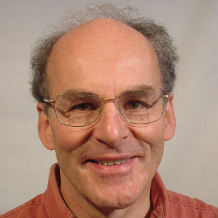
Robin Perutz
I studied the structure of metal carbonyl fragments for my PhD under J. J. Turner. In that period in Cambridge and Newcastle from 1971-74, I established the existence of one of the first σ-complexes, Cr(CO)5(CH4), and the first metal-Xe bond, Cr(CO)5Xe, by photochemical matrix isolation. After periods in Muelheim, Edinburgh and Oxford, I moved to York in 1983 and was promoted to Professor of Chemistry in 1991.
Along the route from Newcastle to York, I broadened my interests to encompass many aspects of the reaction mechanisms, photochemistry, spectroscopy and synthesis of organo-transition metal and metal hydride complexes. For instance, I have measured the rates of oxidative addition of H-H, C-H, B-H and S-H bonds at 4-coordinate Ru(0) centres and shown that oxidative addition of dihydrogen may occur with essentially no activation barrier. These studies required a combination of product investigation by solution NMR spectroscopy, nanosecond laser flash photolysis and matrix isolation. In recent work in this area, I have used photochemistry within the NMR probehead to observe manganese-propane complexes by NMR and am now developing laser pump-NMR probe methods with my colleague, Simon Duckett. Another major strand of my work has been the development of C-F bond activation at transition metals, culminating in new routes to metal fluoride complexes and fluoro-organics. One spin-off of this work has been the discovery that metal fluoride and metal hydride complexes can form halogen bonds to IC6F5. In turn, we have now been able to demonstrate that hydrogen bonds to neutral metal fluoride complexes are as strong as the strongest hydrogen bonds to organic acceptors. Throughout my work, I have collaborated with theorists to understand the wider implications of my experiments. Recent examples include comparisons of the selectivity for C-H versus C-F bond activation and the development of computational approaches to bond energy correlations. The theoretical predictions of the increase in metal carbon bond strength on ortho-fluorine substitution of a metal aryl have been vindicated by experiment.
I have also turned my hand to supramolecular photochemistry, concentrating on mechanistic studies of compounds designed and synthesised in house. For example, I have demonstrated that photo-induced charge separation can occur in times as short as 10-12 s by use of ultrafast infrared spectroscopy. This research has led to the current emphasis on solar fuels and the reduction of carbon dioxide with visible light by incorporating metalloporphyrin photosensitisers with CO2 reduction catalysts.
I have delivered the Tilden Lecture of the Royal Society of Chemistry, the Dow Lectures at the University of Ottawa and the Seaborg Lectures at the University of California, Berkeley. I have been awarded the Nyholm Medal and Lectureship of The Royal Society of Chemistry for 2005. I was awarded the Sacconi Medal of the Italian Chemical Society in 2008 and the Franco-British Award of the French Chemical Society in 2009. I served as President of Dalton Division of The Royal Society of Chemistry from 2007 - 2010. I was elected a Fellow of the Royal Society, the UK’s national academy in 2010. Fellowship of the American Association for the Advancement of Science followed in 2015.
I have become very active in promoting women in science and served as a member of the Athena SWAN steering group from 2006-11, and on the panel for the Royal Society Rosalind Franklin award from 2012-14. This work for women in science arose from my role in improving the department’s support for women in science which contributed to its Athena SWAN Gold award, renewed in 2015. I am currently a member of the Royal Society’s Diversity Committee. I am also active in support for disabled students in STEM subjects and served for several years on the national STEMM-Disability Committee.
Current Research Group
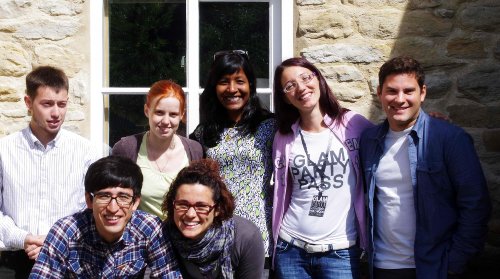
- Meghan Halse Post-doc with Simon Duckett and Robin Perutz, working on developing time-resolved spectroscopy methods using NMR detection. This project aims to use laser pump, NMR probe methods to monitor chemical reactivity on microsecond timescales. She received her PhD in 2010 from Victoria University of Wellington (NZ) and worked as a post-doctoral researcher at the Centre for high-field NMR in Lyon, France from 2010 to 2013.
- Sarah Henshaw, PhD student jointly supervised by Robin Perutz and Simon Duckett, investigating the addition of parahydrogen to photosensitive transition metal complexes using in-situ laser photolysis with NMR detection in conjunction with parahydrogen enhancements. In addition to my research, I work within the Centre for Magnetic Resonance as part of the team maintaining the departmental NMR spectrometers. I completed my MChem degree at York which included a Year in Industry placement undertaken at Eli Lilly as part of their analytical technologies department.
- Naser Jasim, Experimental Officer, supports the research group and does research on C-X bond activation (X = F, H, O) and metal fluoride complexes. He did his BSc and MSc in Baghdad and later a PhD in York.
- Jessica Milani studied for her MChem degree at the University of Camerino in Italy, working in the research group of Prof. Pettinari, on a joint project with Prof. Galindo at the University of Seville in Spain. She worked on oxo-diperoxo-complexes of molybdenum with amino acids that are used as catalysts in epoxidation reactions. She is currently working towards a joint PhD in the Fairlamb and Perutz research groups on C-H functionalisation of fluoroaromatics at Pd.
- George Platt obtained his MChem at the University of Sheffield working with Dr. Lance Twyman on developing drug delivery system based on pH-responsive micelles. He is currently working in the Fairlamb and Perutz groups, studying the mechanism of palladium catalysed direct arylation reaction of fluoroarenes towards a PhD. The project is being sponsored by the EPSRC.
- Barbara Procacci completed her PhD in 2012 in the Perutz group working on photoinduced C-F, C-, B-H and Si-H activation by Rh and Ru complexes focusing on mechanistic investigations. She decided to stay in the RNP group for a postdoc to work on a jointly supervised project with Simon Duckett. Her work is aimed to develop NMR spectroscopy as a time-resolved technique to monitor organometallic reactions which happen on a fast timescale. She did her MChem in Perugia (Italy).
- Dan Smith received his masters and PhD from Durham, afterwards escaping to sunny Texas before returning to the UK. After a year in Norwich as an 'alchemist' Dan joined the group in 2012 working towards determining the energetics of halogen and hydrogen bonding for metal functional groups. In 2014 Dan leaves to Cardiff to take up an industrial position at CatScI Ltd.
- Vargini Thangavadivale, PhD student, working on mechanistic studies of catalytic C-H activation of fluoroaromatics by metal complexes and solid state halogen bonding of metal complexes. First degree obtained in Sri Lanka.
Research Links
The research group has active collaborative links within the Department of Chemistry in York, with research groups elsewhere in the UK and abroad.
Collaboration in York with the research groups of:
Collaboration with research groups outside York:
- Odile Eisenstein, CNRS, Montpellier, France
- Sylviane Sabo-Etienne, CNRS, Toulouse France
- Lee Brammer, University of Sheffield
- Chris Hunter, University of Cambridge
- Bill Jones, University of Rochester
Funding
Research support comes from EPSRC.
Current grants:
- EPSRC: ‘Quantitative scale for halogen bonding and hydrogen bonding: a foundation for self-assembly’ with Lee Brammer and Chris Hunter (University of Sheffield), 2012-2015
- EPSRC: ‘Light driven oxygen atom transfer’ with Anne Duhme-Klair, 2013-2016
- EPSRC: ‘Reaction monitoring on micro-second timescales by nuclear magnetic resonance: aiming for a paradigm shift in the study of reaction mechanisms’, 2013-2017